Numerous studies have shown that listicles are the most cited content type in AI answers. Not blog posts. Not product pages. Not in-depth guides.
So, what’s so special about listicles? Why do AI search engines prefer them over every other content format?
In this guide, I'll break down what listicles actually are and what makes them so powerful. I’ll also show you how to write your own listicles and use ListBrew to find third-party listicle opportunities across Google and AI search.
What is a listicle?
A listicle is a blend of "list" and "article." It's a piece of content structured around a numbered or bulleted list, where each item gets its own explanation, context, or analysis.
The format has been around for a long time. As Arika Okrent, Linguist and Author, wrote in the University of Chicago Magazine back in 2014:
"The true essence of the list form is consecutive order, taking a mass of stuff and finding a way to break it into pieces."
BuzzFeed popularized the format in the 2010s with posts like "21 Things Only 90s Kids Will Understand." But listicles have evolved significantly since then.
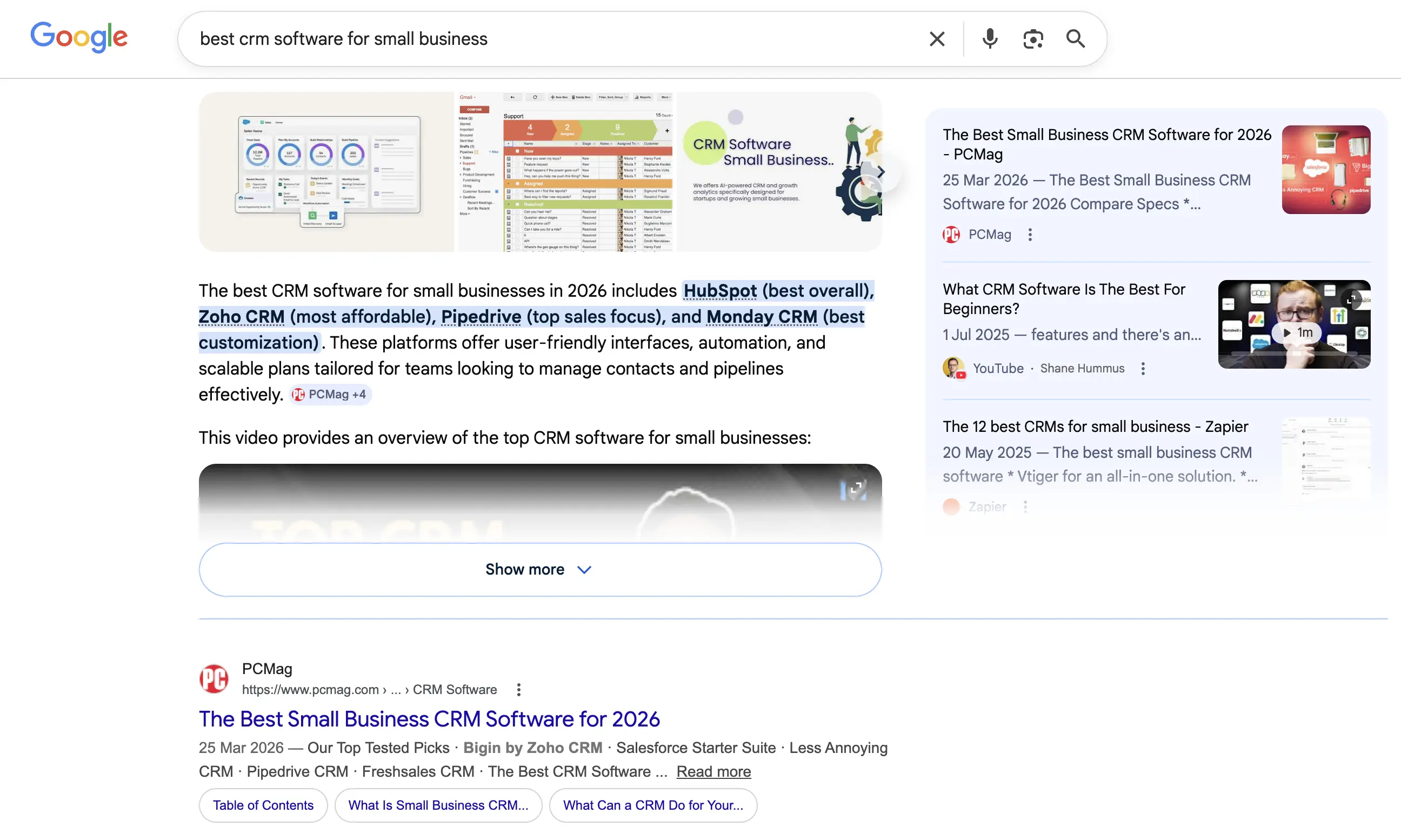
Today, listicles are widely used in SEO to shape buying decisions. They dominate both traditional search results and LLM answers for commercial queries like "best CRM software for small business", "top project management tools", and "Mailchimp alternatives."
What separates a listicle from a plain list is depth. Each item gets a real description with features, pros and cons, pricing, and who it's for. That structure is what makes them useful to both readers and, increasingly, AI search engines.
Why AI cites listicles more than any other format?
Listicles are the most-cited content format in AI search, and it’s backed by data:
A study by Wix Studio analyzing 75,000 AI answers and over 1 million citations found that listicles make up 21.9% of all AI citations, the highest of any single format. For commercial-intent queries, that number jumps to 40.9%.
AirOps' 2026 State of AI Search report found an even starker picture: nearly 90% of third-party brand mentions in AI search come from listicles, comparison pages, and review roundups.
An Ahrefs study of 26,283 ChatGPT citations found that “best x” articles represent 43.8% of all page types, far higher than blog posts (14.34%), product pages (9.99%), and homepages (5.08%).
So, why do AI search engines love listicles so much? Here are the three main reasons:
Listicles are easy to pull from
Each item in a listicle is self-contained: a product name, a short description, a few pros and cons, a verdict. When an AI needs to answer "what's the best CRM for startups?", it can grab one entry from a listicle and drop it straight into a response.
This is something that’s not possible with long-form articles, where AI models need to scan the whole thing to find the information they need.
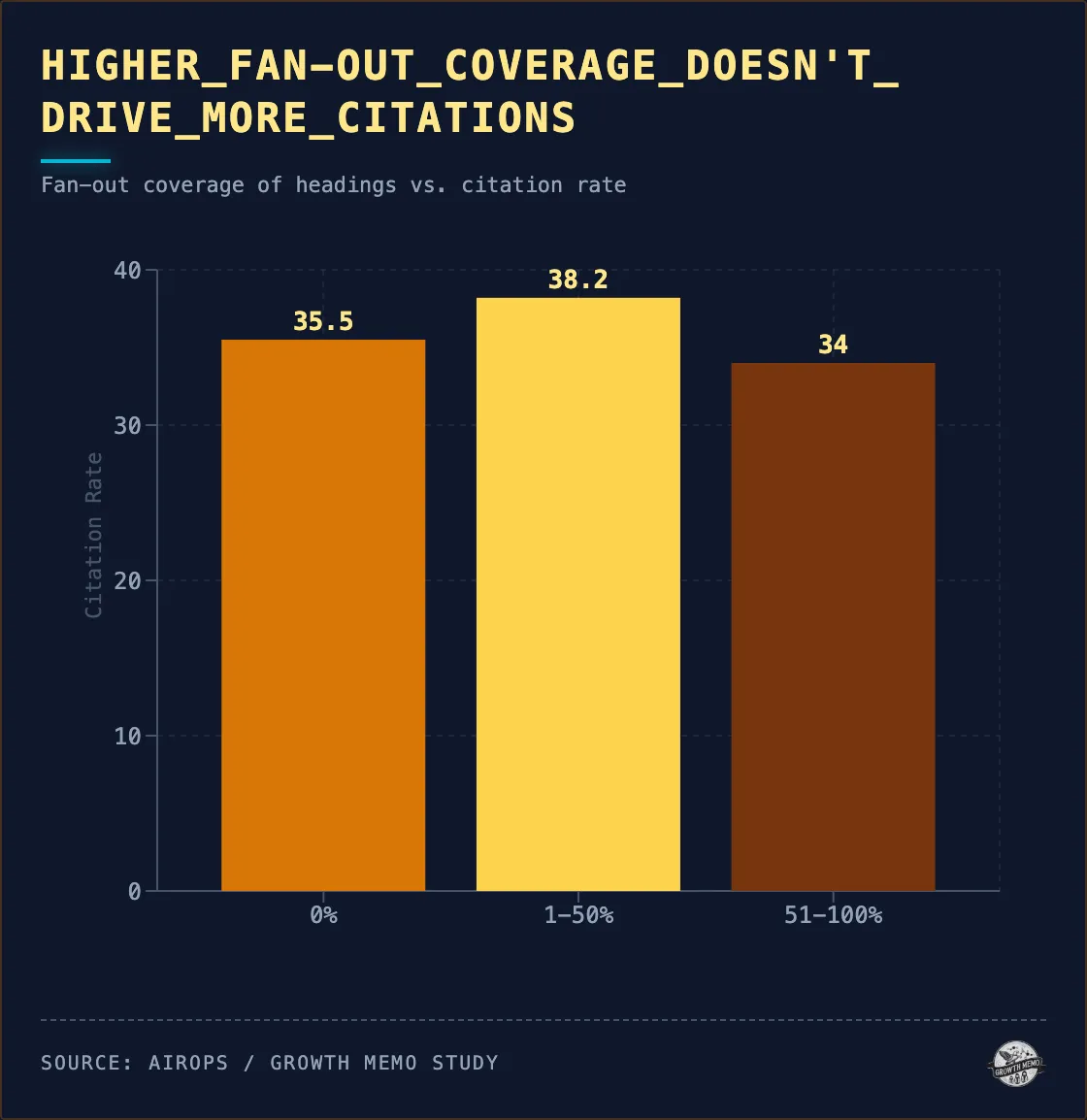
In fact, a recent study by Kevin Indig confirmed that short, focused pages get more ChatGPT citations than comprehensive guides.
Listicles match how people ask questions
“What’s the best (tool/software/company) for (X)?” is the exact kind of query people put into AI chatbots when they want fast recommendations.
That makes listicle-style content a natural fit for AI search, because it mirrors the format of the question and delivers answers in a structure models can easily scan, compare, and summarize.
Listicles require less processing power
AI systems are designed to find answers as efficiently and fast as possible. Instead of analyzing the whole page, listicles give AI models a ready-made, structured answer they can use immediately.
As Nick Lafferty, Growth Marketing Lead at Profound, explained in a presentation analyzing 250 million AI responses:
"AI search is lazy. If someone asks ‘what’s the best running shoes?’ ChatGPT won't go to Nike or Adidas. It finds a listicle and says 'they did the work for me. I'm going to use less compute to find the answer’."
Types of listicles (With examples)
Listicles come in different shapes and forms. Here are the most common types you'll see ranking in search today:
Type | What it does | Example |
|---|---|---|
Best-of / Roundups | Curated list of top products or tools in a category | |
Alternatives | Roundup of alternatives to a well-known product | |
Comparisons | Head-to-head breakdown of two or more products | |
How-to / Step-by-step | Numbered process guide | "How to Set Up Google Analytics in 7 Steps" |
Tips / Strategies | Actionable advice on a specific topic | "5 Ways to Improve Your Email Open Rate" |
Resource lists | Curated collection of tools, links, or assets | "12 Free SEO Tools Every Marketer Should Know" |
There are actually many more listicle types and examples. But for AI visibility, you only need to focus on the first three.
According to Wix Studio's research, listicles account for 40.9% of AI citations on commercial-intent queries — and these are overwhelmingly best-of, alternatives, and comparison formats.
The how-to formats still perform well for informational queries, but the buying-intent formats are where the real commercial value lies. If you want to appear on "best [category]" or "[competitor] alternatives" lists, that's where to focus.
Do listicles still work in 2026?
You may have seen studies suggesting listicles are losing ground in AI search.
Josh Blyskal, Product Adoption and Education at Profound, found that the share of listicle citations in AI search dropped from 35% to 27.3% between August and November 2025.
Wil Reynolds, Founder of Seer Interactive, tracked over 2 million citations from November 2025 through February 2026 and found that ChatGPT listicle citations dropped 30% from December to January.
There's truth to that, but the full picture is more nuanced.
For example, in the Seer Interactive study, there were 78 listicle URLs that actually grew citations against the 30% decline.
What separated the winners from the losers? The listicles that gained citations were comprehensive, backed by transparent methodology, regularly updated, and structured with consistent sections per item.
Tom Wells, GEO Researcher at Peec AI, found a similar pattern after analyzing 232,000 listicle citations over 12 weeks. Self-promotional listicles still account for around 11% of all citations, but ChatGPT is 3x better at filtering them out than other platforms, with a self-promotional citation rate of just 3.6%.
So are listicles dying? No. But low-quality ones are.
As Liam Dunne, Co-Founder of Discovered Labs, put it:
"Listicles are not the issue. Low-quality content is the issue, regardless of the format."
The listicle format still works. But the bar for quality has gone up, and self-promotional content is being filtered out.
How to write listicles that get cited by AI
Based on Seer Interactive’s findings, as well as numerous other studies, here are six best practices to keep in mind when creating listicles:
1. Study what's already cited
Before writing anything, map the competitive landscape. Search your target queries in Google, ChatGPT, Perplexity, and AI Overviews to see which listicles are already being cited.
How many items do the top results include? What structure do they use? Where are the gaps you can fill?
2. Be comprehensive
In Seer Interactive’s study, listicles that grew during the decline listed 10-20 options. The ones that lost ground listed 5-8.
HubSpot's internal data also confirms this finding: listicle posts with 7 or more items in the title outperform those with 6 or fewer.
The more comprehensive your listicle is, the more likely it contains unique information that others don’t provide.
3. Show your methodology
Listicles that win in AI search disclosed their selection criteria. Why did these products make the list? What were they evaluated on? Transparent methodology signals credibility to both readers and AI.
4. Use a structured format
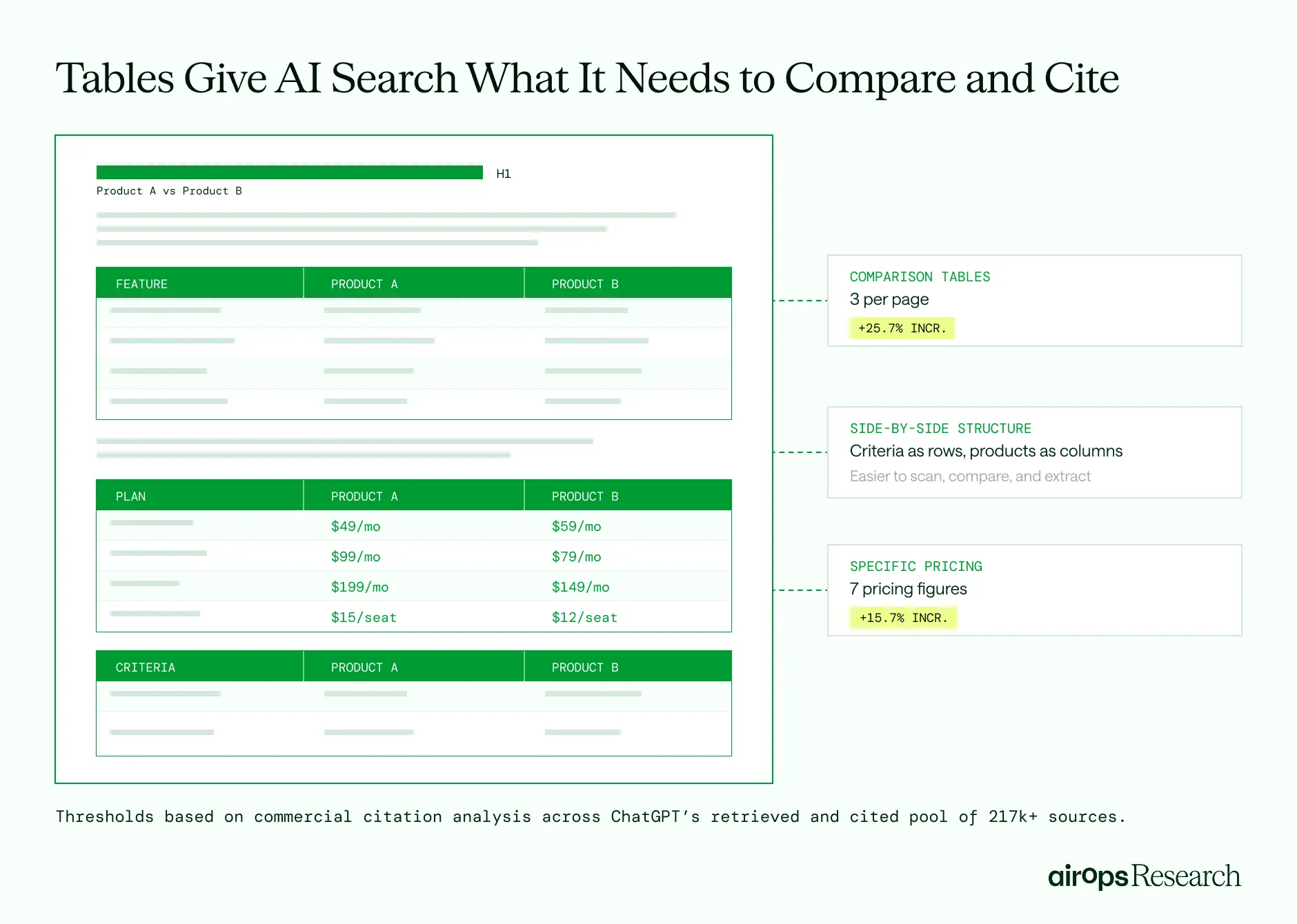
Every high-performing listicle used the same format for each item: features, pros and cons, pricing, and who it's best for.
Including comparison tables also helps — AirOps found that pages with three or more comparison tables are 25.7% more likely to be cited.
You can use our listicle templates to make sure your content follows the right structure and format.
5. Provides enough information for each item
SE Ranking's data shows that sections of 120-180 words between headings receive 70% more citations than shorter sections. One-line descriptions won't get cited. AI needs enough text per item to extract a meaningful recommendation.
As Dmytro Sokhach, Founder of Editorial.Link, noted:
"Write the most detailed, descriptive characteristics possible... not empty fluff."
6. Update your content regularly
Content updated within the last 3 months receives nearly 2x the citations over outdated content. 79% of cited "best of" lists were published or updated in 2025, and 26% had been updated within the previous two months.
Freshness is one of the strongest citation signals in AI search. Set a reminder to refresh your listicles quarterly at minimum.
Want to dive deeper into the topic? Check out our step-by-step guide on how to write a listicle that ranks and gets cited.
How to get featured on third-party listicles
Writing your own listicles is valuable. But as the data says, AI search engines are increasingly good at filtering self-promotional content.
The bigger opportunity is getting your brand featured on the third-party listicles that AI already cites:
After analyzing 16,346 AI citations across 3,000 sources, Maeva Cifuentes found that 97.8% of listicle citations come from third-party domains, not brand-owned sites.
AirOps confirmed this pattern: brands are 6.5x more likely to be cited through third-party sources than their own domains.
The same study also suggested that 85% of brand mentions in AI search originate from third-party pages.
Here's a practical listicle outreach approach for earning third-party listicle placements:
Identify the queries that matter. What are your buyers searching for? Use your keyword data to find queries like "Best [your category]", "[competitor] alternatives", and "[product A] vs [product B]."
Find listicles that rank for those queries. Use ListBrew to find listicles that rank in Google results and get cited in ChatGPT, Perplexity, Gemini, and AI Overview answers for your target keywords and prompts.
Find the contact details. Most listicles have a named author. Use the Find Contacts feature in ListBrew to get the verified email address and LinkedIn profile of whoever is responsible for a specific listicle.
Pitch for inclusion. Keep it short. Explain who you are, what your product does, and why it belongs on their list. Offering something in return, like a link exchange or access to your product for testing, increases your success rate.
One Reddit user shared their results after landing placements on just 3 listicles per month: a 60% increase in AI citations and 29% growth in organic traffic within the first month.
FAQs
What is the difference between an article and a listicle?
An article presents information in flowing prose with a narrative structure. A listicle organises it as a numbered or bulleted list, with each item getting its own heading and supporting text. Many listicles blend both approaches, using list structure with article-depth per item.
What is the difference between a listicle and a list?
A list is just bullet points or items with no context. A listicle adds depth to each item with descriptions, analysis, pros and cons, and supporting information. Think of a grocery list vs. a "10 best kitchen gadgets" article with a paragraph on each item.
How long should a listicle be?
The best-performing listicles include 10-20 items, according to Seer Interactive's analysis. Each item should have 120-180 words of substance. Total length matters less than depth per item.
Are listicles good for SEO?
Yes. Listicles are the most-cited content format in AI search at 21.9% of all citations, and account for 40.9% of commercial-intent AI citations. They also perform well in traditional search, particularly for "best [X]" and "[X] alternatives" queries.
Does a listicle need a conclusion?
A brief wrap-up helps, but keep it short. The value is in the list items themselves. A sentence or two summarising the key takeaway is enough.
Get your brand on the listicles that matter
If your product should be showing up in "best of" lists, comparison articles, or alternatives roundups in your category, ListBrew can help you find them.
Enter your brand and keywords, and ListBrew scans Google and AI engines to surface the listicles that rank and get cited. You'll see domain authority, traffic, Google rank, and which AI engines cite each article. When you find the right opportunities, pull editor contact details in one click and start pitching.
Get started free with 50 credits. No credit card required.