There’s a reason why listicles drive 80% more traffic than any other content types. They’re well structured, easy to digest, and highly sharable for both humans and machines.
But not all listicles are created equal. Some rank highly in Google and AI search, while others barely get noticed. What sets the best ones apart is that they go beyond a generic list — they’re grounded in real research, first-hand testing, and objective recommendations that deliver genuine value to readers.
In this article, we'll look at 9 listicle examples that truly get it right. For each one, I'll explain what they do well, why the format works in Google and AI search, and key lessons you can apply to your own content.
1. The “best X” listicle
This is one of the most common and commercially valuable listicle types. It curates and ranks top products, services, and tools in a specific niche.
Why it works
This format matches comparison intent. The reader already knows the category and wants help narrowing options.
“Best X” listicles are also the most cited page types in ChatGPT, accounting for 43.8% of all page types according to an Ahrefs study.
Example
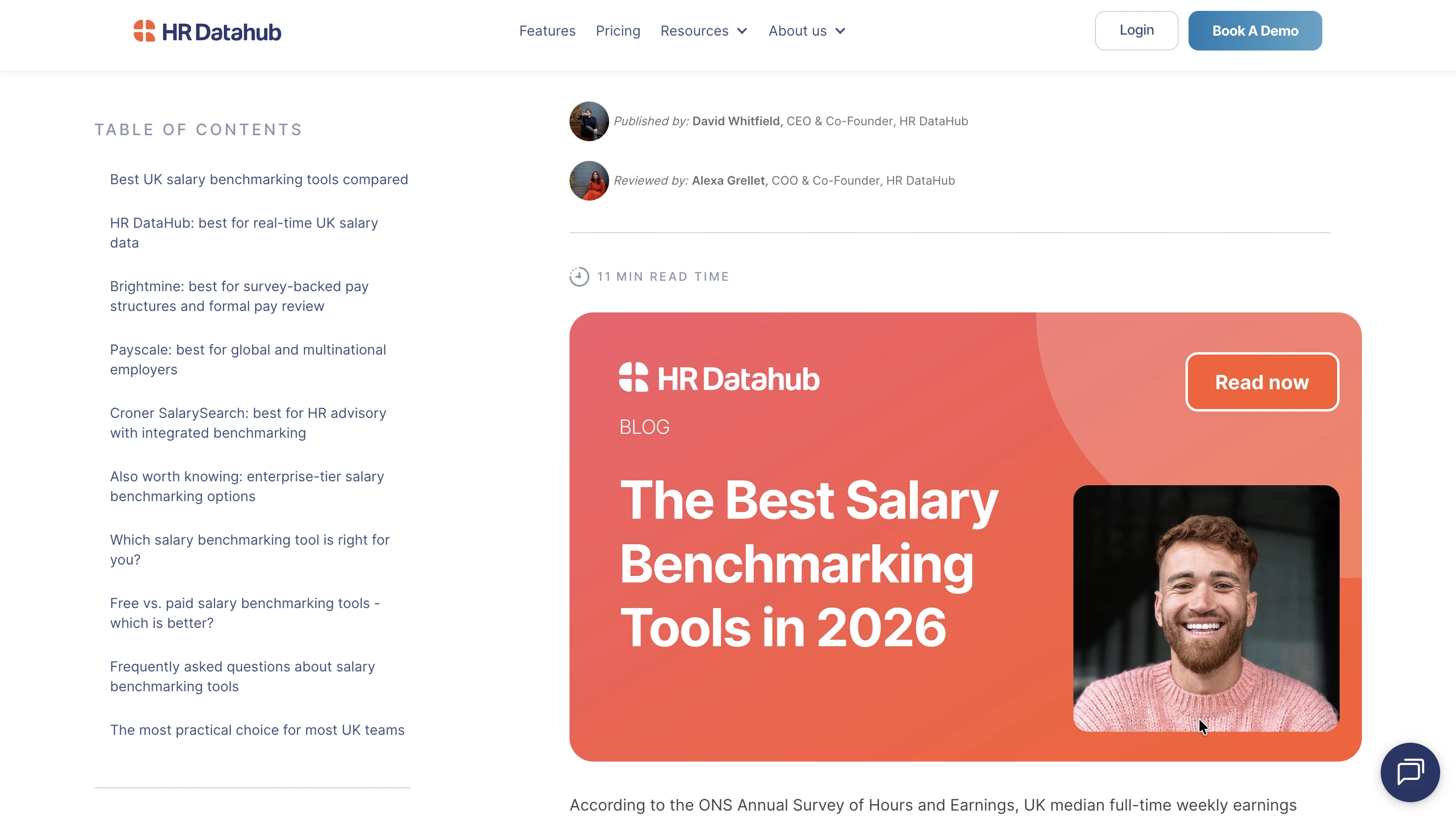
HR Datahub: Best Salary Benchmarking Tools in 2026 in the UK
What this listicle does well
Comparison table at the top. This provides ready-made citation blocks that LLMs can easily extract and use when forming an answer.
Transparent evaluation criteria. The article explains exactly how each tool was selected and ranked, which builds reader trust.
Each tool entry follows an identical repeatable template: a short description, strengths, limitations, and who it’s best for.
2. The “alternatives to X” listicle
This one is similar to “Best X” roundups. The only difference is, instead of focusing on the category (e.g. email automation), it focuses on the leading brand in that category (e.g. Mailchimp).
Why it works
This listicle format targets both prospects who are close to buying and existing users looking to switch from their current provider.
Example
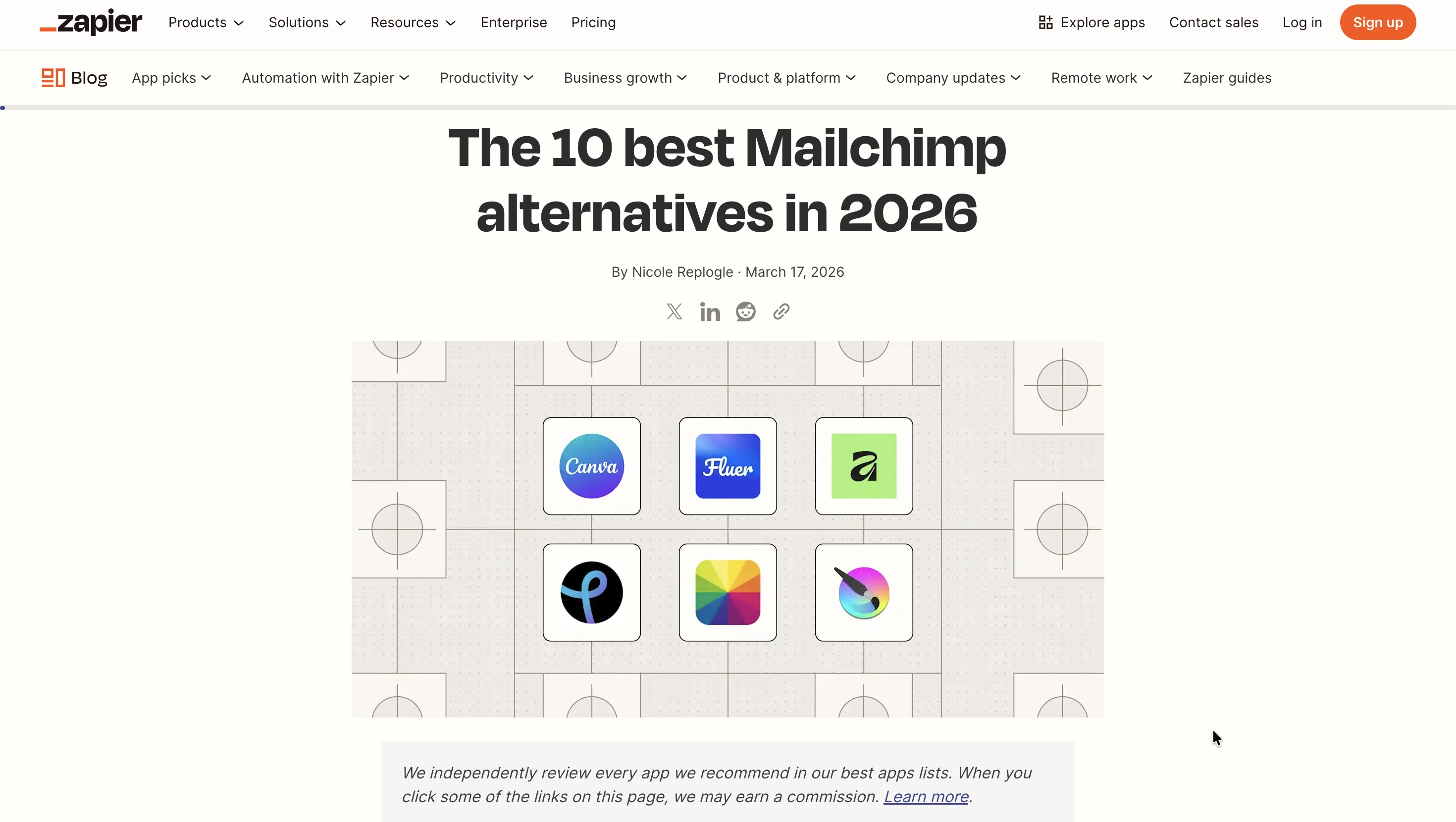
Zapier: The 10 Best Mailchimp Alternatives in 2026
What this listicle does well
A clear methodology section that explains how Zapier evaluated and tested apps. It describes human reviewers, dozens of hours of testing per app, and real-world usage, which signal E-E-A-T.
Each entry talks about a specific use case e.g. “Best Mailchimp alternative for eCommerce.” This is the most extractable pattern for LLMs because it directly answers the way people prompt AI.
Updated date prominently displayed, which signals content freshness. Countless AI SEO studies have made it clear that AI systems prefer fresh content.
3. The “features/Use cases” listicle
If you run a SaaS brand, this listicle format can be a great way to break down your product’s standout features or use cases into a structured list.
This type of listicle isn’t only great for your existing customers, but also potential leads who are looking for a specific feature your software offers.
Why it works
Features and use cases map neatly onto the questions buyers ask mid-funnel: Can this tool do X? Does it support Y? Is it a fit for my team's workflow?
Example
Ahrefs: 15 Ahrefs MCP Use Cases for SEOs & Digital Marketers
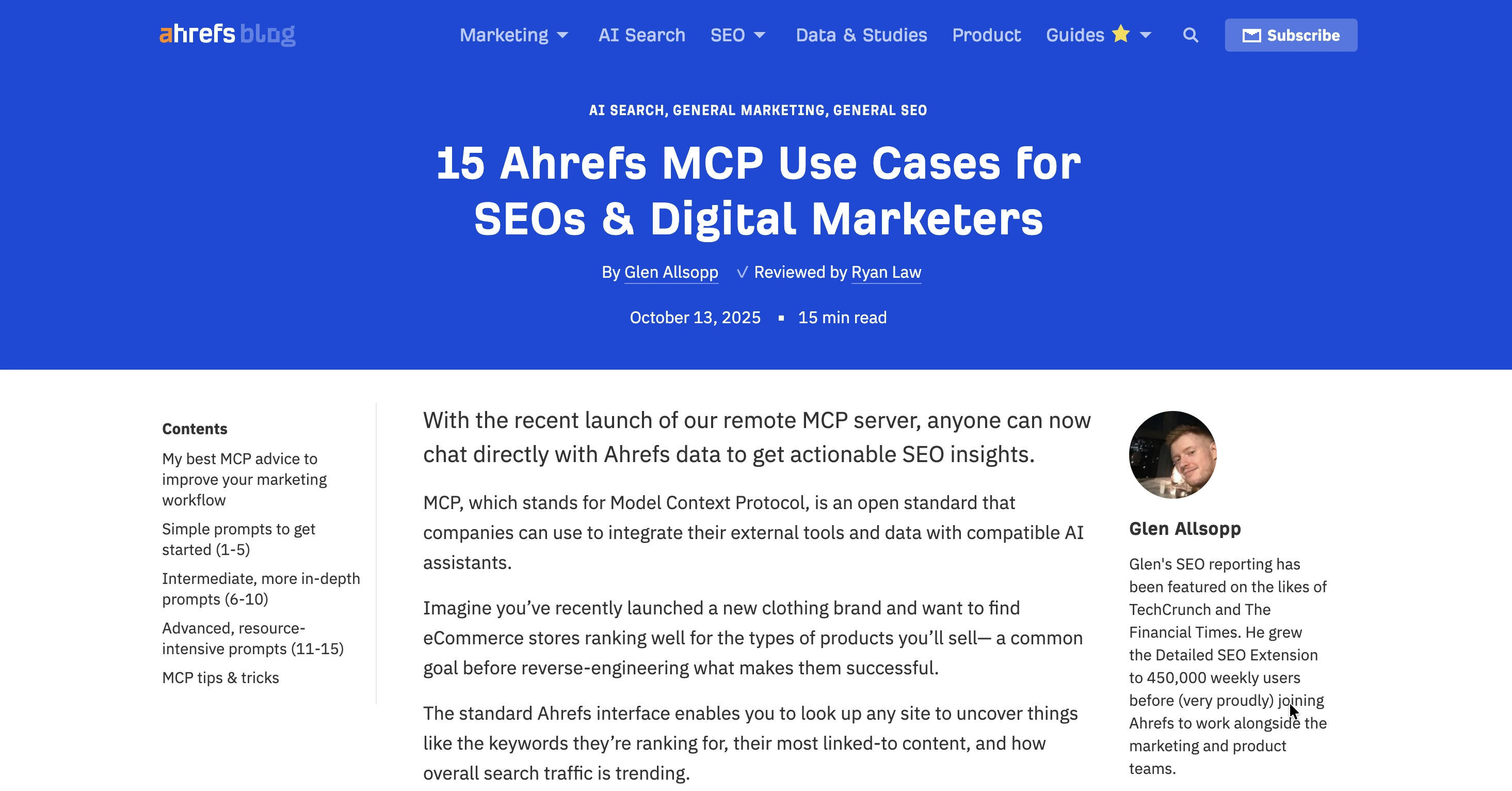
What this listicle does well
The title clearly states who the target audiences are: SEOs and digital marketers. That filter sets expectations upfront and helps both readers and LLMs quickly determine relevance.
Three-tier difficulty structure (Simple / Intermediate / Advanced). It serves three different reader segments with one URL and creates multiple entry points for different query intents.
A detailed author bio that shows the content is written by an actual expert with hands-on experience, not a generic content team.
4. The “x mistakes to avoid” listicle
This is great for informational content and problem-aware readers. It captures readers earlier in the journey, when they are diagnosing issues rather than choosing a product.
Why it works
People naturally want to avoid errors. According to a research paper by Tversky and Kahneman, the fear of losing is twice as powerful as the joy of gaining.
Example
Shopify: 6 Common Content Marketing Mistakes To Avoid
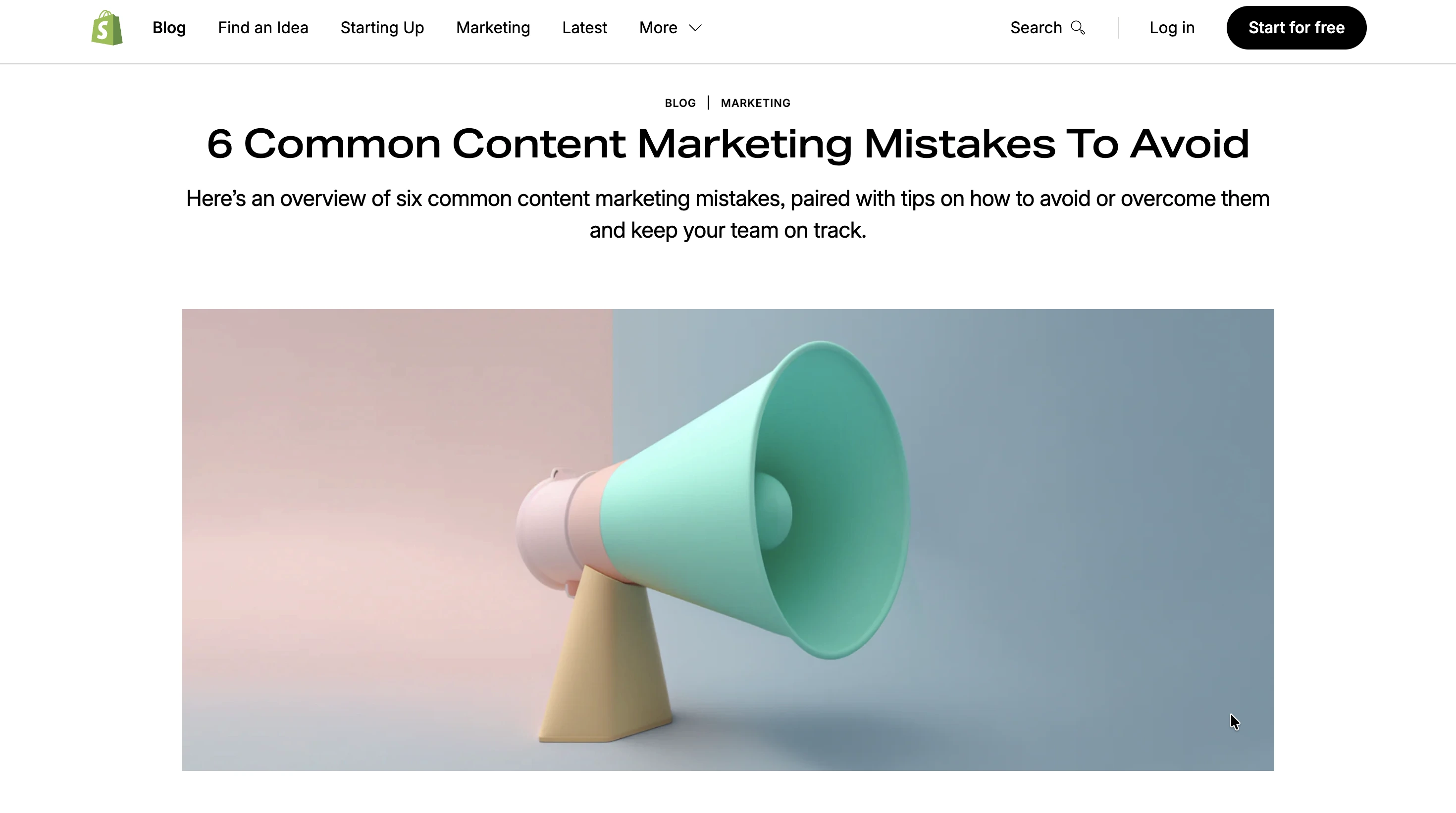
What this listicle does well
Each H3 follows a consistent problem → solution framework. It states the mistake, explains why it's a problem, then offers a fix.
The FAQ section at the bottom is pre-formatted for AI extraction and PAA (People Also Ask) boxes.
5. The “examples” listicle
This type of listicle is great for attracting users looking for inspiration, comparisons, or proven ideas.
Why it works
Readers want more than advice and theory; they want concrete examples of what works in the real world.
Example
Unbounce: 40 Best Landing Page Examples of 2026
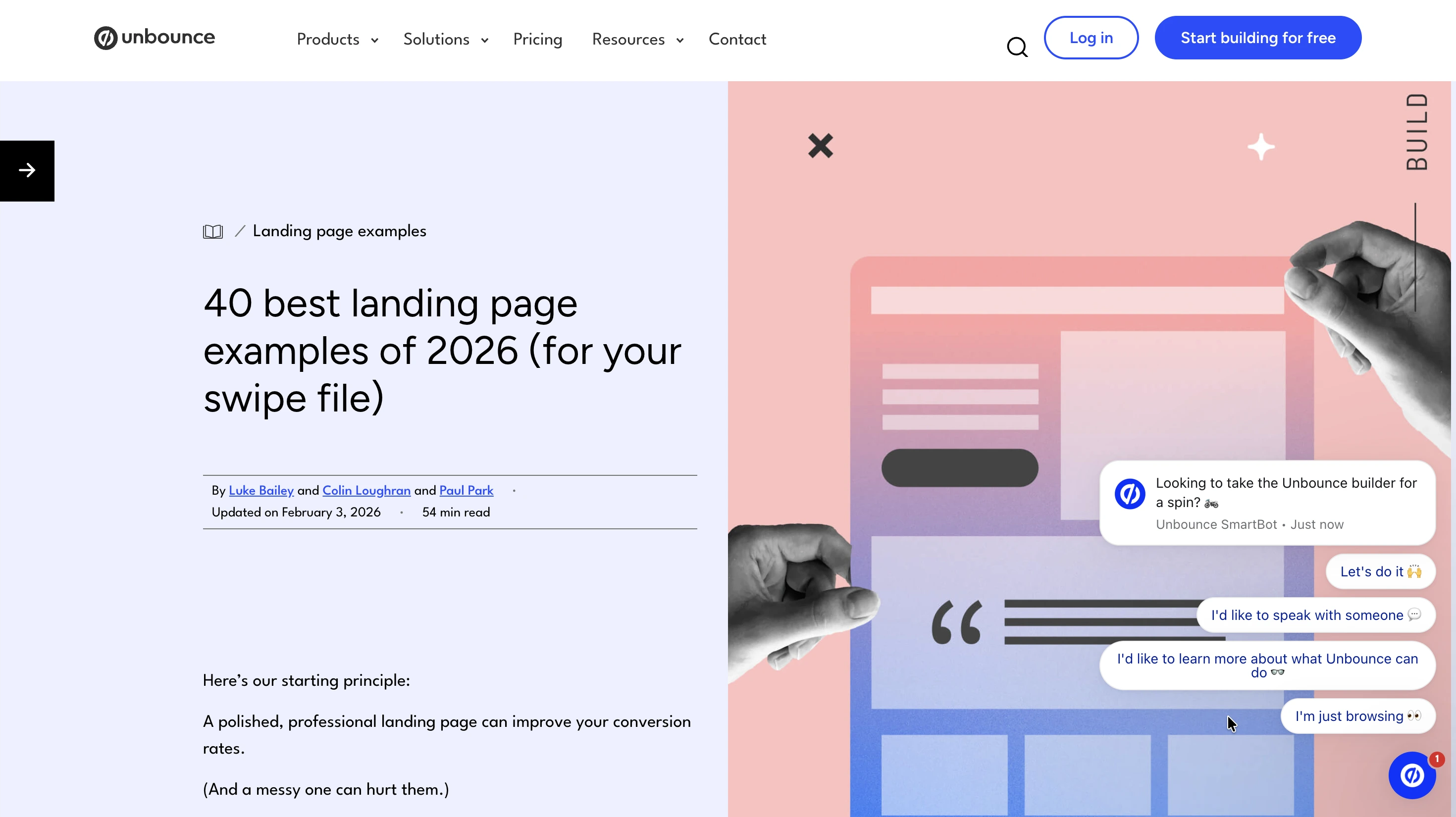
What this listicle does well
Alphabetical table of contents with jump links to all 40 examples at the top. This allows readers to jump to any specific example that’s relevant to them, which is critical for user experience.
It doesn’t just give landing page examples; it explains what works and what readers should take away, making it a structural learning resource.
It references their own Conversion Benchmark Report — proprietary data that competitors can't replicate.
6. The “ways to improve” listicle
This is classic informational content that targets a specific pain point, and breaks down the tactics to fix it.
Why it works
This format targets solution-aware readers: people who've identified the exact problem and are actively hunting for tried-and-tested tactics.
Example
Bloomreach: 7 Proven Ways To Improve Your Click-Through Rate (CTR) in 2025
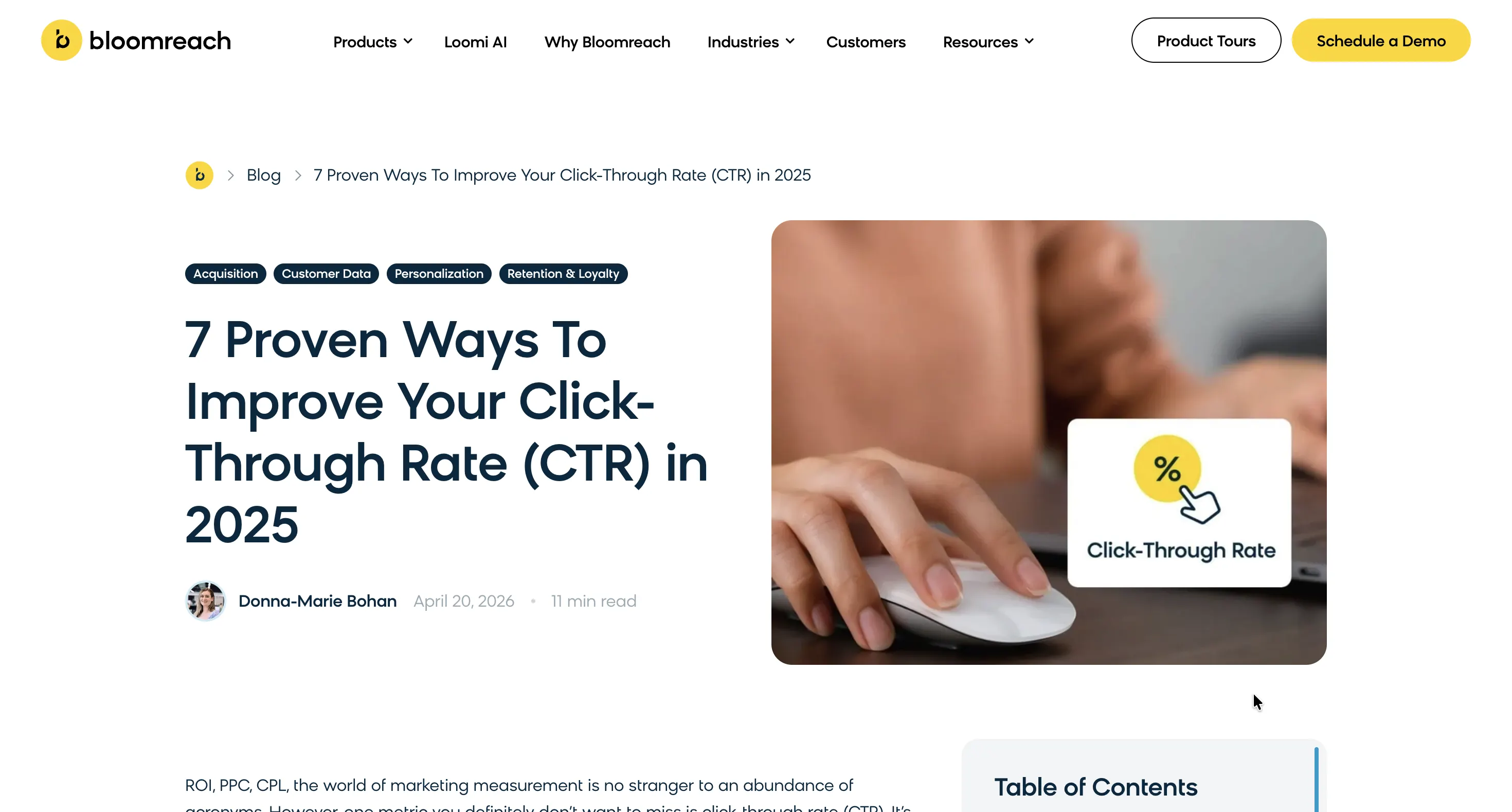
What this listicle does well
Actionable tactics backed by data and real case studies. Each recommendation is justified with evidence, not opinion.
Each section contains short, specific recommendations that are easy to cite by LLMs. The bite-sized structure makes the page a ready-made source for AI-generated answers.
7. The “benefits” listicle
This format takes a product, service, or strategy and breaks down the specific reasons a buyer should invest in it. It's great for introducing a new category, educating a cold audience, and building the commercial case for a purchase.
Why it works
"Benefits" listicles are a great tool to persuade readers who are category-aware but not yet convinced. This type of content helps them understand why a certain solution is worth paying for.
Example
WebFX: 5 Benefits of Outsourcing GEO to a Professional Agency
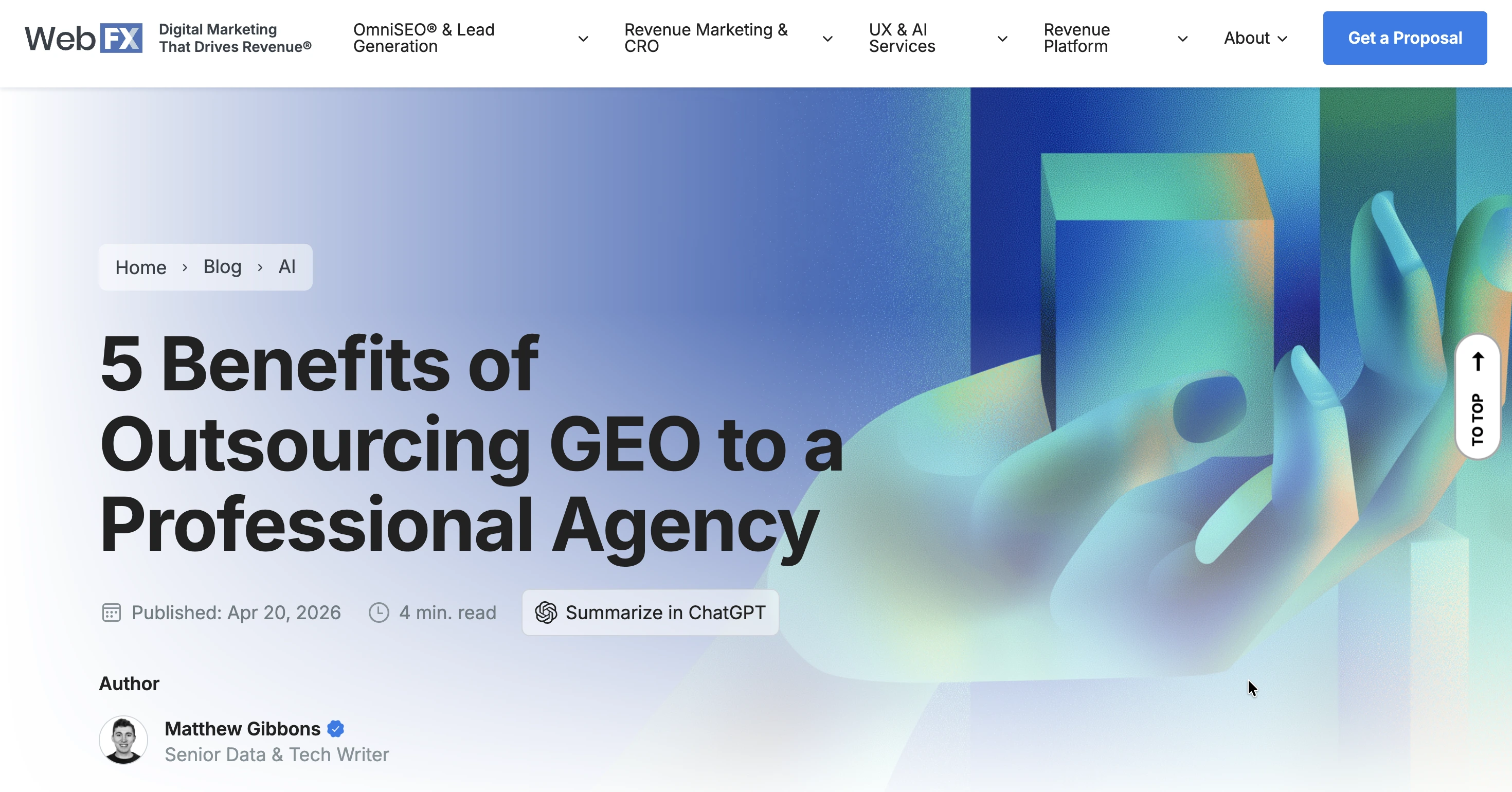
What this listicle does well
A key takeaway right at the start of the article that immediately answers the question.
Each benefit is packaged into a neat, self-contained point. This fits well with how AI systems extract information.
8. The “steps” listicle
This listicle type works well for technical topics that require a clear step-by-step process, such as “how to publish content in wordpress” or "how to install a conversion tracking pixel.”
It’s not suitable for broad topics like “how to start a business.”
Why it works
A step-by-step structure can be easy to summarize by AI, especially when the steps follow a clear order and each one is labelled well.
Example
Monster Insights: How to Set Up Google Analytics in 2026: Step-by-Step
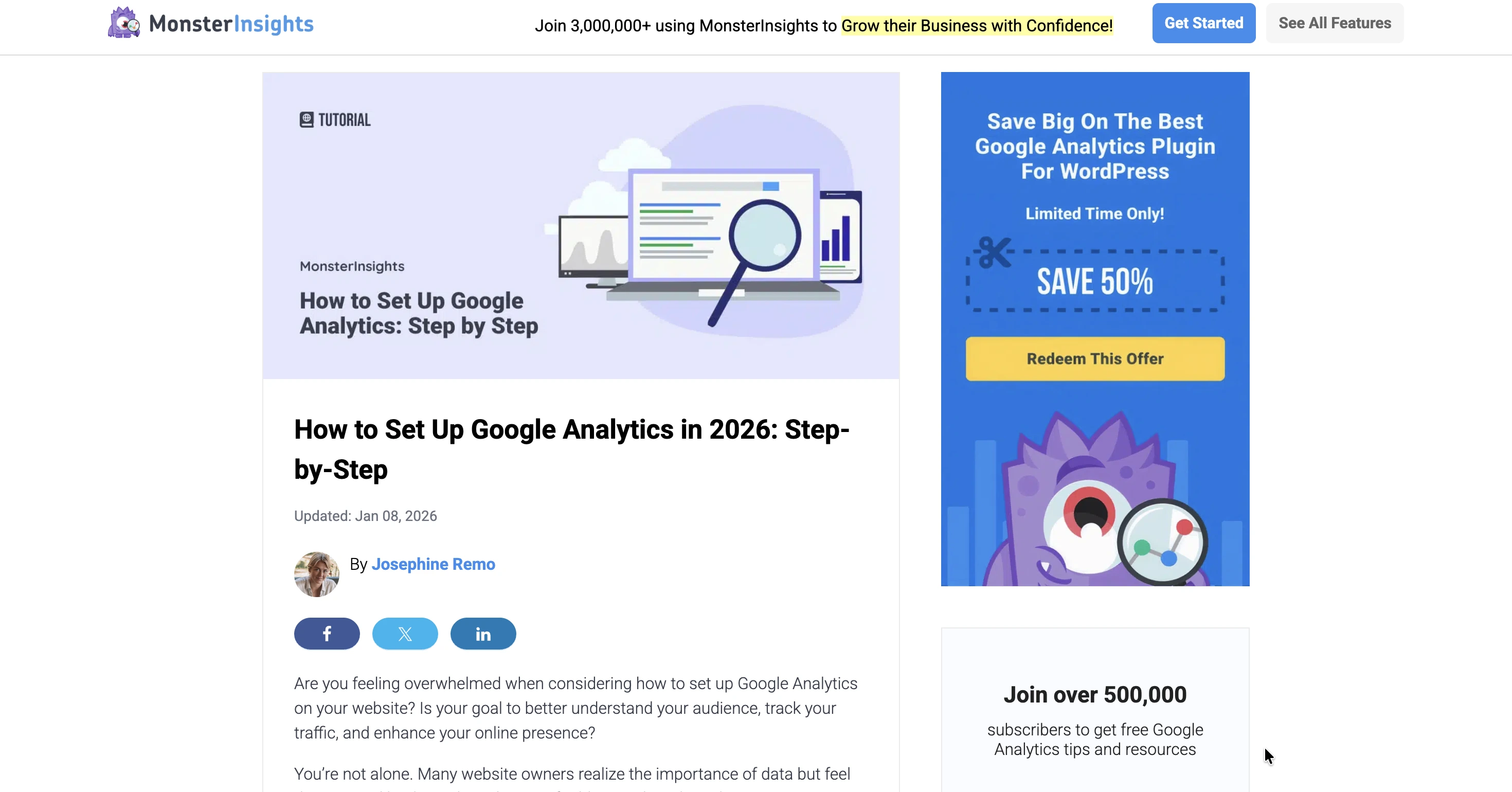
What this listicle does well
This guide includes a screenshot at almost every step. This is helpful for readers following along in real time.
Multiple implementation paths (plugin vs. code vs. GTM) means the page answers several variants of the same query — "how to set up GA on WordPress," "how to set up GA without a plugin," "how to set up GA with Tag Manager."
9. The expert roundup listicle
This type of content features insights and tips from a group of experts, all responding to the same question or topic.
Why it works
Expert roundups have three major benefits:
Trust and credibility. It brings together first-hand perspectives and experiences, which add credibility to your content.
Entity optimization. Named contributors, job titles, brands, and specific quotes can strengthen entity clarity in AI search.
Distribution advantage. Because contributors are featured in the piece, they are more likely to share and link to it, helping the article earn visibility beyond organic search alone.
Example
Position Digital: 13 Recruitment Agencies Share Their Marketing Strategies
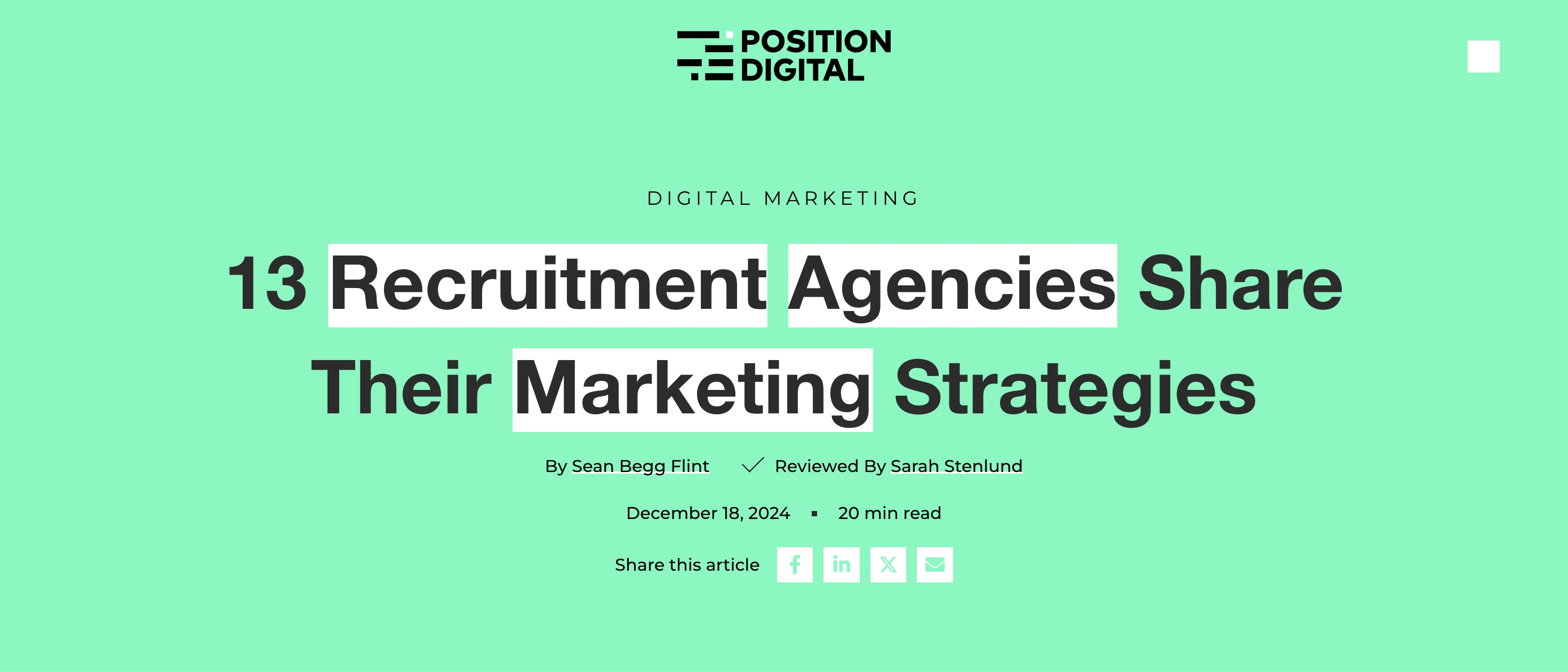
What this listicle does well
Each expert is introduced with their full name, title, company, and headshot, which signal E-E-A-T to both Google and LLMs.
The strategies are grouped by theme rather than listed at random, which gives the article an editorial structure on top of the raw expert input and makes it easier to navigate.
Every contribution includes a specific tactic or example, not just general opinion. That turns the article into a practical resource instead of a collection of platitudes.
Explore more listicle ideas that drive traffic and sales
Why do listicles work well in SEO and AI search?
Listicles have dominated the SEO industry for years. And now, with the rise of AI search, they’re more important than ever.
Here’s why.
Listicles match common search patterns
Some queries demand structured answers.
For example, when someone searches for “best small business crm software,” they want to compare vendors and evaluate options. When a person types “how to set up google analytics,” they want a clear step-by-step guide.
A listicle is the right format to satisfy those search intents.
Listicles are highly scannable
When consuming written content online, very few people actually read the whole thing. 73% admitted to skimming blog articles, according to a HubSpot survey.
Listicles are built for that behavior. Readers can scan the H2s, jump to the entries they’re looking for, check the specifics, and bounce, all in under two minutes. No other long-form format makes navigation this easy.
John Karam explained beautifully why the human brain loves structured lists:
Why do listicles work so well? Because they play on how the brain likes to consume information:
- Structure (we know where it starts and ends)
- Skimmability (we can jump to what matters)
- Curiosity (when you see “7 ways…” your brain wants closure)
- Chunking (complex ideas broken into bite-sized pieces)
Listicles are easy to repurpose for LLMs
When someone asks “what’s the best email marketing software,” it would be expensive and time consuming for AI systems to visit, analyze, and compare every email marketing vendor on the web.
Instead, these engines can simply grab a few listicles, extract the entries, and synthesize an answer in a fraction of the time.
As Shane H. Tepper, Co-Founder of Resonate Labs, put it:
“AI needs to synthesize multiple sources quickly. Listicles provide pre-structured information. Numbered formats aid extraction and recombination. Clear hierarchies simplify understanding.”
The anatomy of a great listicle
Before you start writing your own listicles, first you need to know what makes a great listicle. Based on the examples above, the best listicles usually share the same fundamentals:
1. A clear search intent
The best listicles are built around a specific reason someone is searching in the first place. That might be to compare options, find examples, avoid mistakes, learn the steps in a process, or understand the benefits of something.
When the intent is clear, the structure of the listicle feels focused and useful rather than random. It also helps search engines and AI systems understand exactly when the page is relevant.
2. A summary at the top
Give readers a way to get the gist without reading the full piece. A comparison table, a numbered summary, a table of contents with jump links — the specific format varies, but the intent is the same.
This upfront summary is also where most AI citations are pulled from, because it's the densest, most structured block on the page.
3. Transparent selection criteria
Explain how the shortlist was built. Zapier's methodology section describes human reviewers and hours of testing per app. HR Datahub's opening paragraphs walk through exactly how tools were evaluated.
That transparency does two jobs at once. It builds trust with skeptical readers, and it signals to Google and LLMs that the content was built with editorial rigor rather than affiliate incentives.
4. Easy navigation and readability
Good listicles are built for skimming. Clear headings, jump links, tables, short paragraphs, and concise summaries all help readers find the exact point they need quickly. Each entry should also follow a similar format so readers know what to expect.
Check out these listicle templates to get started.
5. Self-contained sections
Every point should make sense on its own. The strongest listicles package each item as a clear, complete idea rather than forcing readers to piece the meaning together from the surrounding text. This also makes the content far more extractable in AI search.
6. Strong information gain
Your content should offer a unique value that other listicles don’t offer to have a chance at ranking.
Whether it’s an expert quote, real case study, or original data, every entry needs at least one piece of proof that a competitor can't easily copy. That's what separates listicles that earn citations from generic ones that get ignored.
7. Freshness signal
For many listicle formats, especially comparisons and recommendations, freshness matters. A recent publish date or visible update note helps reassure readers that the information is still accurate and relevant.
We also know that LLMs prefer up-to-date content. According to Seer Interactive, most citations in AI Overviews, ChatGPT, and Perplexity were published in the past two years.
Learn how to effectively update your content in this comprehensive content refresh guide.
Common listicle mistakes to avoid
A lot of listicles fail for the same reasons:
Padding the number. If the article only needs 7 points, do not force 25.
Repeating the same point. Readers notice fast when every item says roughly the same thing.
Chasing volume with no angle. A big keyword is not enough. The article needs a reason to exist.
Writing vague headings. “Tip 1” is much weaker than “Use descriptive subheadings.”
Publishing thin AI-generated filler. Google’s guidance says AI can be useful for research and structure, but scaled low-value pages without added value can violate spam policies.
46 listicle ideas for your next content
Looking for inspiration for your next listicle? Here are some ideas to get you started, from product roundups and examples to expert lists and data-driven content.
Listicle ideas for SaaS
10 Best Software for [Specific Use Case]
15 Best [Software Category] for Small Businesses
10 [Software Category] Alternatives to Try
12 Tools Every [Job Role] Should Know
15 Best [Software Category] for Remote Teams
10 [Software Category] With the Best User Experience
20 SaaS Landing Page Examples to Inspire Your Next Redesign
15 SaaS Pricing Pages Worth Studying
10 SaaS Companies With Great Content Marketing
12 SaaS Growth Strategies That Actually Work
15 Marketing Tools Worth Trying
10 SaaS Trends to Watch in 2027
20 SaaS Companies to Watch in 2027
15 Best AI SEO Tools for SaaS Companies
25 SaaS Marketing Statistics for 2027
Listicle ideas for E-commerce
15 Best E-commerce Platforms for Small Businesses
10 Best Shopify Alternatives for [Audience]
20 E-commerce Websites With Great UX
15 Best Product Page Examples
10 E-commerce Brands With Great Email Marketing
12 E-commerce SEO Tools Every Store Owner Should Know
15 Product Photography Examples to Inspire Your Store
10 E-commerce Marketing Strategies That Drive Sales
20 Best E-commerce Brands to Follow for Inspiration
15 E-commerce Landing Pages That Convert
10 Common E-commerce Mistakes and How to Avoid Them
20 E-commerce Trends to Watch in 2027
15 E-commerce Brands With the Best UX
10 E-commerce Experts to Follow
20 E-commerce Statistics Every Marketer Should Know
Listicle ideas for agencies
10 Best [Type] Agencies in [Location]
15 Best Digital Marketing Agencies for [Industry]
10 Best SEO Agencies for Enterprises
15 Best Branding Agencies for Startups
10 [Service] Agencies Worth Hiring in 2027
15 Agencies With the Best B2B Websites
10 Digital Agencies With Great Content Marketing
15 Agency Websites to Inspire Your Next Redesign
10 Creative Agencies With Standout Branding
12 Marketing Agencies Using AI in Innovative Ways
10 Best Agencies for Small Businesses
15 Agencies to Watch in 2027
20 Marketing Agencies Using AI Search
10 Best AI SEO Agencies in the US and UK
15 Digital Marketing Agencies to Watch in 2027
20 Marketing Agencies With the Best Content Marketing
Find the best-performing listicles in your niche
Writing good listicles that actually perform in search takes time and a lot of effort. An easier and faster solution is to get featured in listicles that already rank in Google and AI engines.
Listbrew helps you do exactly that. It finds hundreds of listicle opportunities in your niche, and pulls the author contact details so you can easily reach out to them.
Try Listbrew today for free and get included in listicles that matter most!