Guest posting can help you earn relevant backlinks, showcase your expertise, and get your content in front of the right audiences. If you publish guest posts on the right domains (those that AI frequently cites), you can also increase your AI visibility.
But successful guest post outreach isn’t just about sending hundreds of emails and hoping someone responds.
A large part of the work happens before you send the first email. You need to identify the right websites, find the right contacts, develop relevant topics, and give prospects a clear reason to collaborate with you.
In this guide, I’ll walk you through the correct steps for planning and running a guest post outreach campaign, based on insights from Position Digital’s seasoned outreach team.
Key takeaways
Plan your campaigns around a specific theme, audience, and outreach goal.
Build your prospect list by finding relevant, non-competing websites that share your target audience.
Brainstorm topic ideas using content gaps and your prospect’s existing content to develop relevant pitches.
Find the right contacts by prioritizing people responsible for content, SEO, or marketing.
Send personalised pitches with relevant topic ideas, well-timed follow-ups, and a clear value exchange.
Continue refining your pitches by tracking responses and testing different subject lines, pitch angles, and email copy.
Step 1: Plan your campaigns
Always plan your outreach campaigns in advance, so you’ll have plenty of time to brainstorm the right topics, target the right prospects, and tailor your email pitches to boost response rates.
Christine Altiche, SEO Specialist at Position Digital, suggested planning quarterly and assigning a specific theme to each month.
“In our quarterly planning, we assign a specific theme to each month. For example, for Q3: July is about SaaS, August is about GEO, and September is about link building. Our campaigns are based on the specific theme for that particular month.”
Once you know the theme of each month, you can build your prospect list and guest post topic ideas around it. This keeps your outreach focused and ensures the websites and topics you target are relevant to the campaign.
Step 2: Build your prospect list
This is one of the most important steps in your outreach campaign. No matter how good your email copy is, you won’t get many replies if you’re reaching out to the wrong prospects.
Start by building a list of websites that are relevant to your campaign theme and share a similar audience with your business.
Jelo Guia, SEO Outreach Manager at Position Digital, recommends targeting adjacent companies rather than direct competitors:
“Usually we target companies with whom we share similar audiences, but not our direct competitors. For example, Position Digital is an SEO agency, so we won’t target other SEO agencies; instead, we’ll target SEO tools and blogs.”
Targeting adjacent companies also gives you a stronger foundation for your pitch. Since you already share a similar audience, it’s easier to identify guest post topics that are relevant to their readers and valuable to the prospect.
Another tip is to target domains that are frequently cited in AI answers. Publishing your content there will significantly increase your chances of being found by AI systems.
You can easily do that in ListBrew.
How to build a prospect list with ListBrew
Create a new campaign and choose Guest Post as the campaign type. Set up your brand profile if you haven’t already: website URL, company type, brand name, and short description.
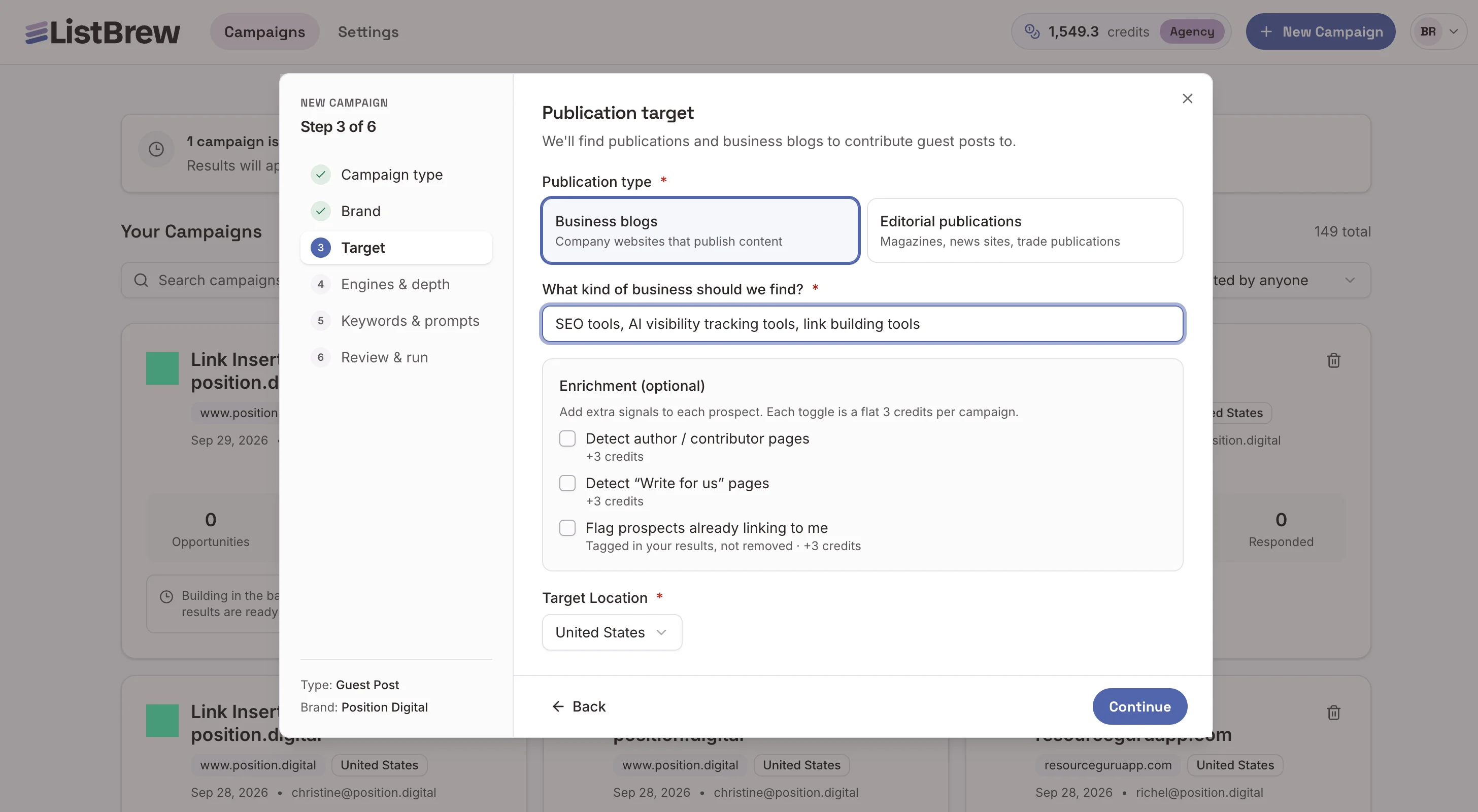
Choose your publication target: Business blogs (companies that publish content) or Editorial publications (news sites, magazines, editorial sites, etc).
Type in your target companies or publications. For example: “SEO tools, AI visibility tracking tools, link building tools.”
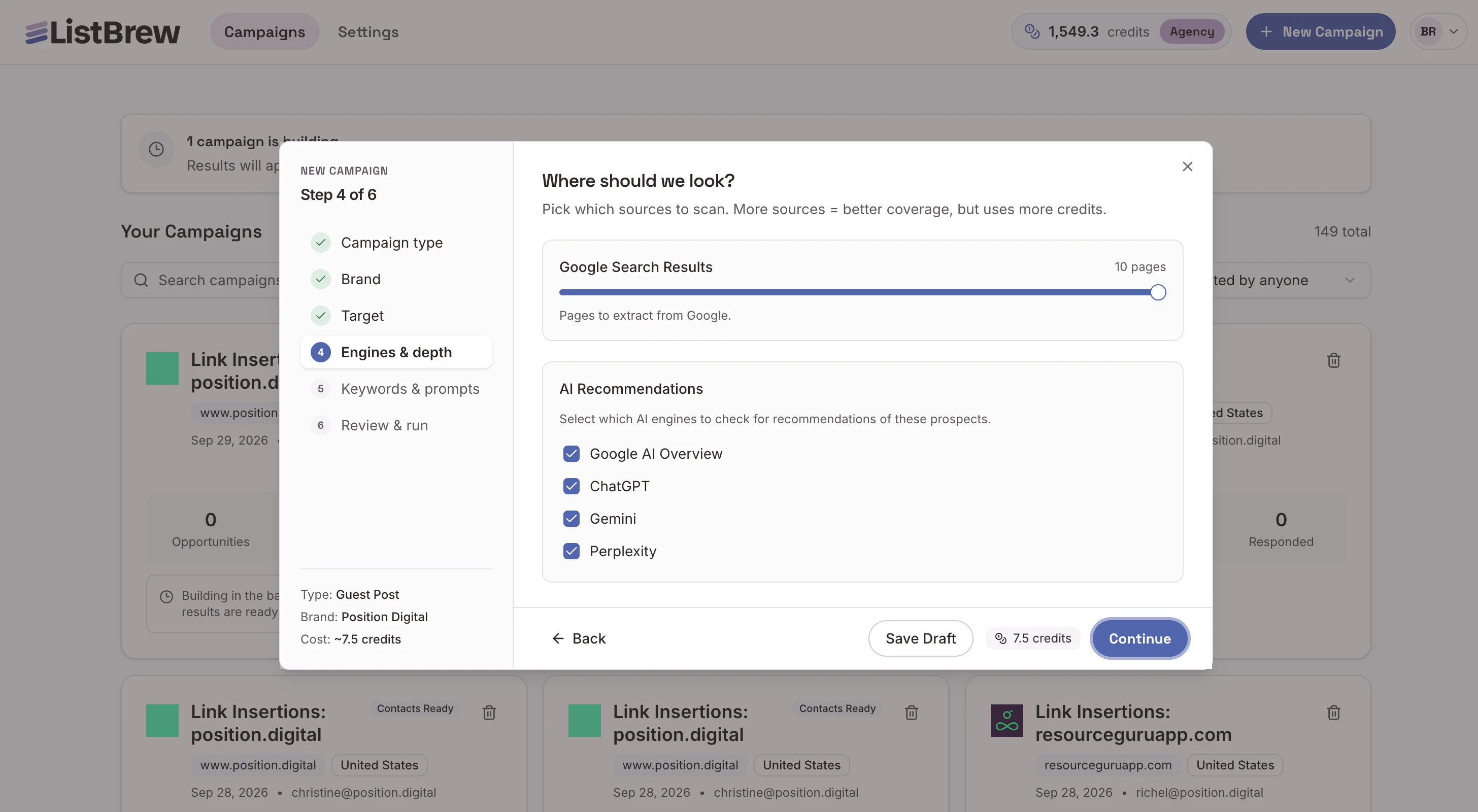
Choose how many pages you want to extract from Google results, and which AI engines you want to extract citations from.
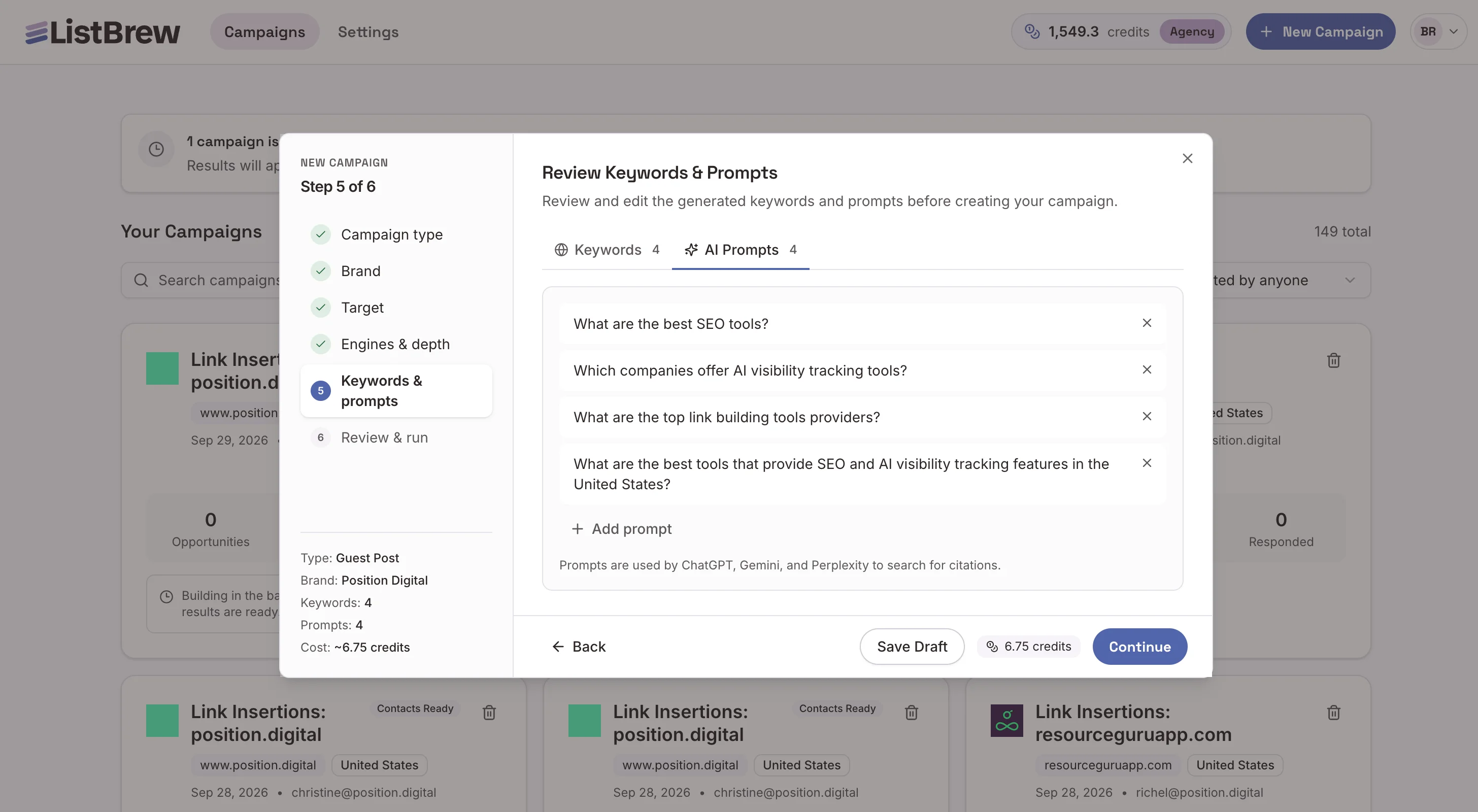
Review and edit the suggested keywords and prompts as you see fit.
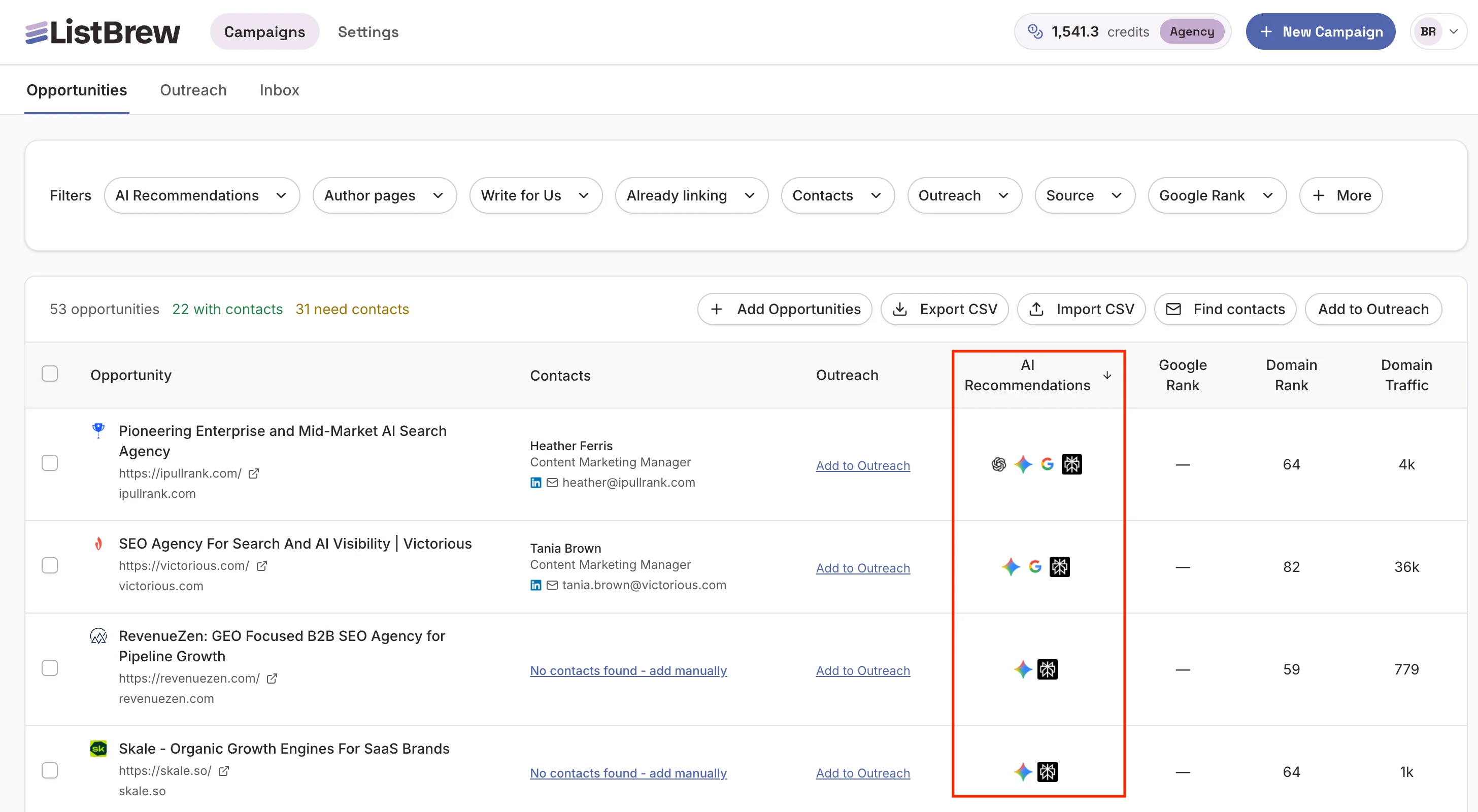
Run the campaign. ListBrew will then show you a list of relevant guest post prospects you can target.
You can filter the result by AI Recommendations to prioritize domains that are frequently cited by AI answers.
Step 3: Brainstorm topic ideas
Once you’ve got a list of prospects, group them into categories and brainstorm relevant topic ideas for each group.
For example:
Category | Prospect name | Topic ideas |
|---|---|---|
Rank tracking tools | Advanced Web Ranking | How to Build an SEO Reporting Dashboard |
SE Ranking | How to Measure the ROI of SEO | |
AI visibility tracking tools | Profound | How to Track Brand Visibility in AI Search |
OpenLens | How to Measure Your Visibility in AI Overviews |
Christine recommends using content gap analysis to make topic suggestions more relevant to each prospect.
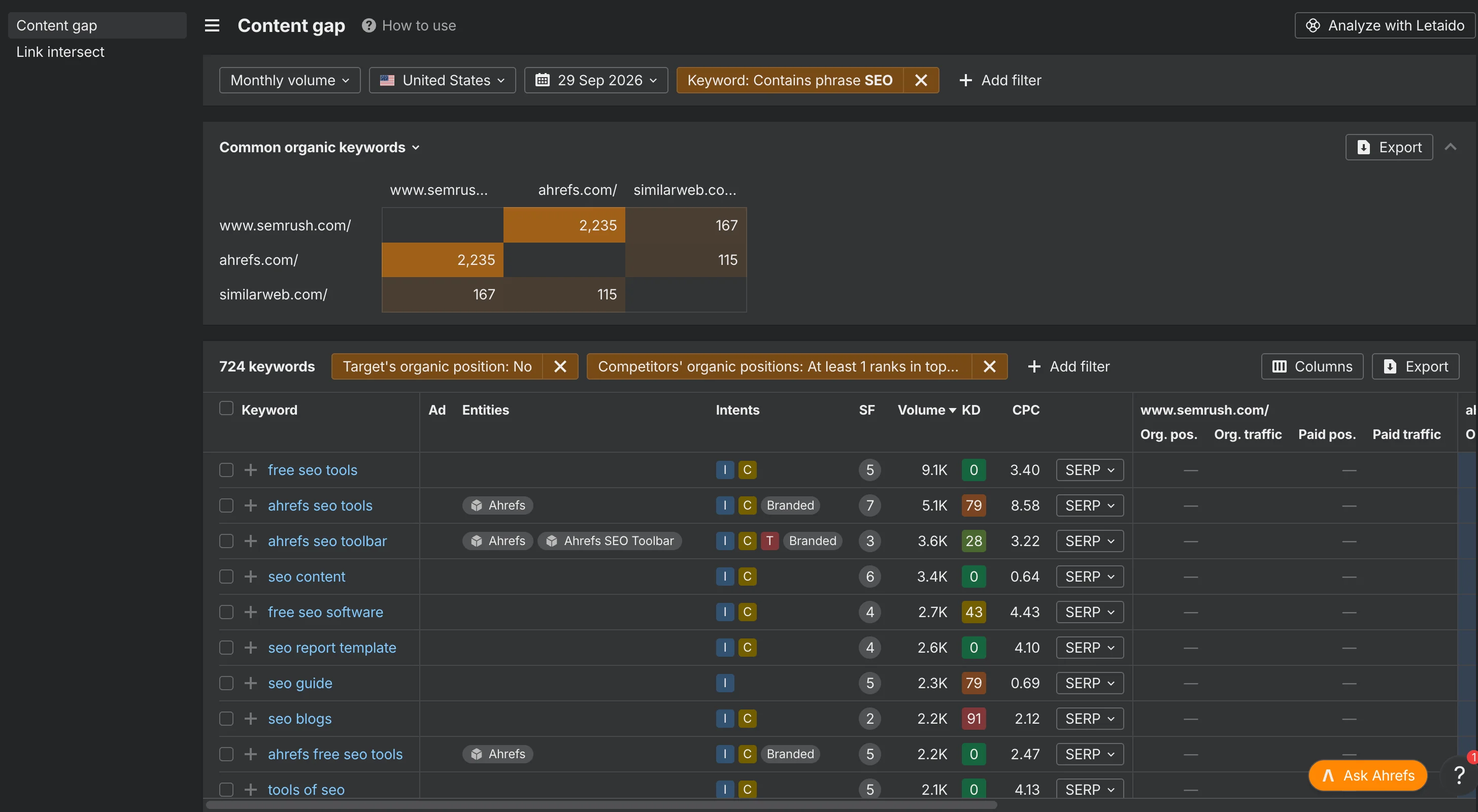
This involves identifying keywords that the prospect’s competitors are ranking for, but the prospect hasn’t covered yet. You can then turn those gaps into relevant topic ideas that fill a genuine need on the prospect’s website.
You can use tools like Ahrefs or Semrush for this. If you’re using Ahrefs, follow these steps:
Go to All Tools → Competitive Analysis.
Under the “This target doesn’t rank for” field, enter your prospect’s domain URL.
Under the “But these competitors do” field, enter the domain URLs or the prospect’s competitors.
Review the keyword gaps and look for topics that are relevant to the prospect’s audience, closely aligned with their product or expertise, and realistic for a guest post.
Filter out keywords that are too broad or irrelevant.
Turn the strongest opportunities into specific, useful article ideas that you can pitch.
This gives you a much stronger pitch than simply asking whether a website accepts guest posts. You can show the prospect what you want to write, why it is relevant to their audience, and where it could add value to their existing content.
The goal is to make your topic ideas feel like useful content recommendations rather than generic guest post pitches.
You should also think about AI visibility when choosing your topics. Consider the subjects you want your brand or experts to be cited for in AI search.
If you want to build visibility around a particular topic, use your guest posts to create authoritative, relevant content that reinforces your expertise in that area. This can help you build a stronger presence across both traditional search and AI-generated answers.
Step 4: Find the contact information
Finding the right website is only half the job. You also need to contact the right person.
As Jelo explains, one of the biggest factors in successful outreach is reaching the right prospect and the right contact:
“The main trick of link building is reaching out to the right prospect and contacting the right contact. That’s it.”
For guest post campaigns, prioritize contacts in this order:
Content marketers, such as content writers, editors, and content managers
SEO professionals, such as SEO specialists and SEO managers
General marketing roles, such as marketing managers
Founders, directors or C-suite executives as a last resort
The reasoning is straightforward: the person responsible for content is more likely to act on a guest post proposal than someone who has no involvement with the company's blog.
How to find contact information with ListBrew
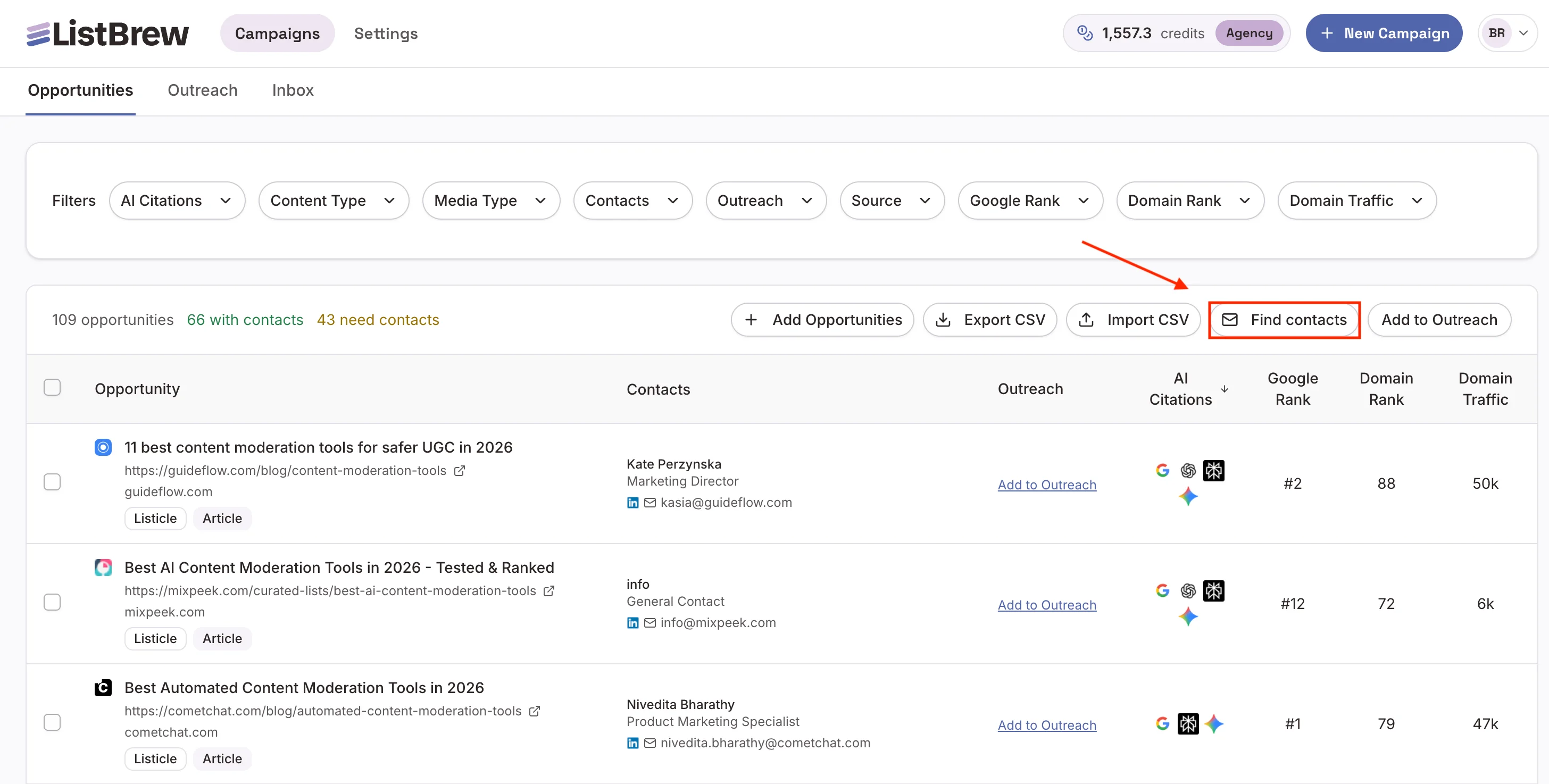
ListBrew integrates with tools like Hunter and Apollo, so you can surface contact information without leaving the app.
Simply click the Find contacts option at the top of the prospect list, and ListBrew will automatically find the contact details (name, role, email address, and LinkedIn profile) for each opportunity.
Step 5: Send personalized pitches
At this point, you know which companies to target, what topics you want to write about, and who you can contact.
Now it’s time to send your pitches.
The goal isn’t to send one email and hope for the best. A good outreach sequence combines personalization, good timing, and consistent follow-ups without becoming overly persistent.
Here are some best practices to keep in mind:
Personalize your pitch and offer something in return
Avoid sending the same generic list of guest post topics to every prospect. Instead, use your content gap research to create topic suggestions specifically for each website.
This gives the prospect a clear reason to consider your pitch and shows that you’ve done your research rather than sending a mass email.
You can also give prospects an additional reason to respond by offering something of value in return.
For example, you could offer to:
Share the article with your newsletter subscribers and social media followers
Provide a link back from one of your partner sites
Give the prospect a free subscription to your tool (if you run a SaaS company)
Give the prospect a free service for one month (if you’re an agency)
The exchange doesn’t have to be complicated. The goal is to make the collaboration mutually beneficial, rather than making the email feel like a one-sided request for a backlink.
Here’s a pitch template you can use:
Hi [First name],
I noticed that your website hasn’t covered [insert topic] yet. Competitors such as [mention competitors] are ranking for this topic and generating around [insert traffic count] monthly visits from it.
We’d be happy to create a comprehensive article covering this topic for your audience. Would you be open to a guest post?
We’ve contributed content to the likes of [insert companies you’ve written for].
As part of the deal, we'd also be happy to offer [insert your offering].
Best,
[Your name]
Send your pitch during working hours
Timing can also affect your response rate. Jelo and his team typically send their pitches Monday to Thursday, between 8:00 AM and 6:00 PM in the recipient’s local time.
This helps ensure your email arrives during normal working hours rather than getting buried in someone's inbox overnight or over the weekend.
If you're running outreach at scale, use your email outreach tool to schedule campaigns according to each prospect's time zone.
Send follow-up emails
Don’t send your pitch once and forget about it.
People are busy, and your initial email can easily get missed. A short, polite follow-up gives your prospect another opportunity to respond without requiring you to write an entirely new pitch.
A simple sequence could look like this:
Day 1: Send the initial pitch.
Day 3: Send a short follow-up asking whether they’ve had a chance to review it.
Day 5: Follow up with another useful detail, such as an alternative topic idea.
Day 7: Send a final follow-up and close the conversation.
Keep your follow-ups short. There’s no need to repeat the entire pitch every time.
How to create outreach sequences with ListBrew
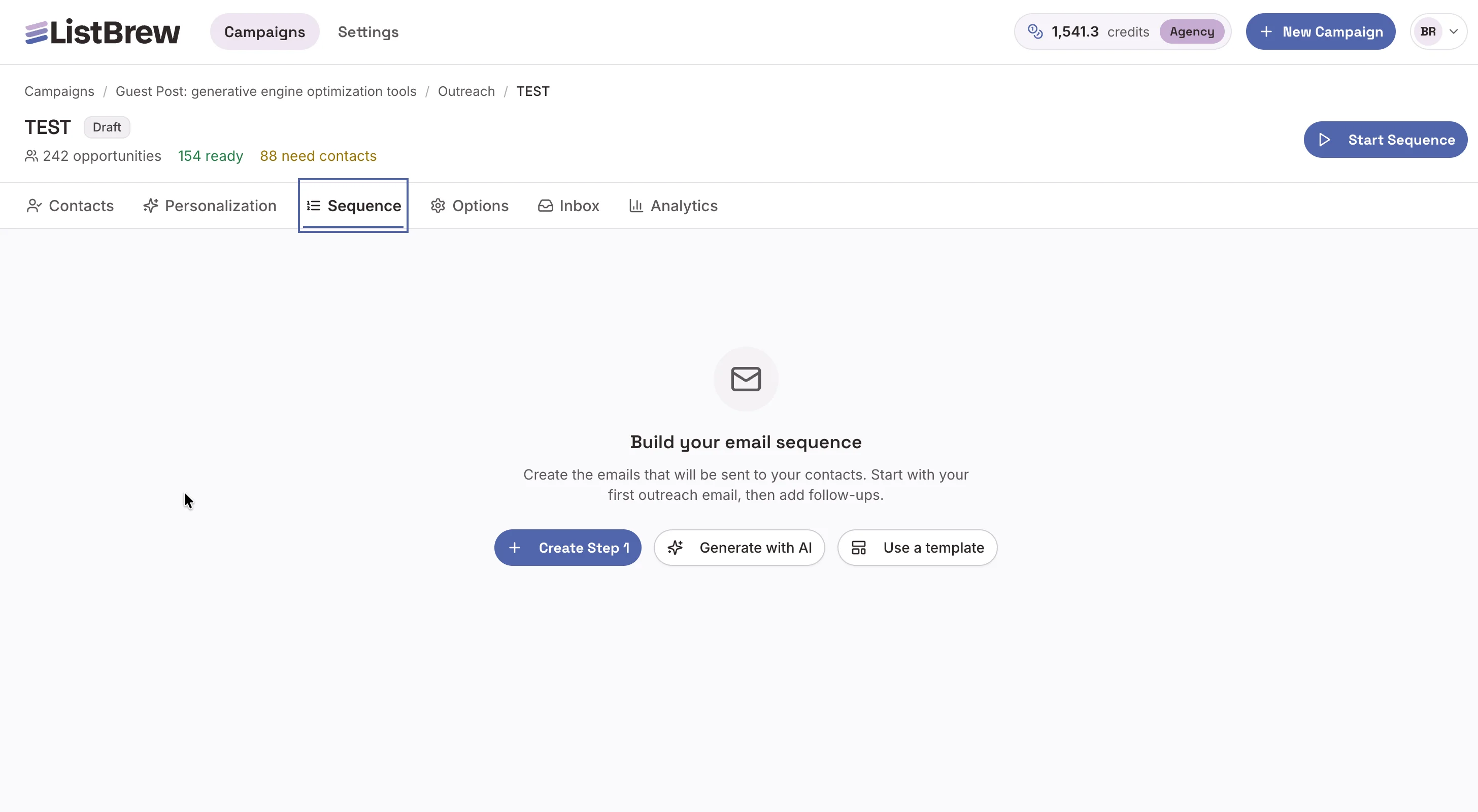
In your prospect list dashboard, click Add to Outreach at the top of the list. You’ll be asked to create a new sequence name.
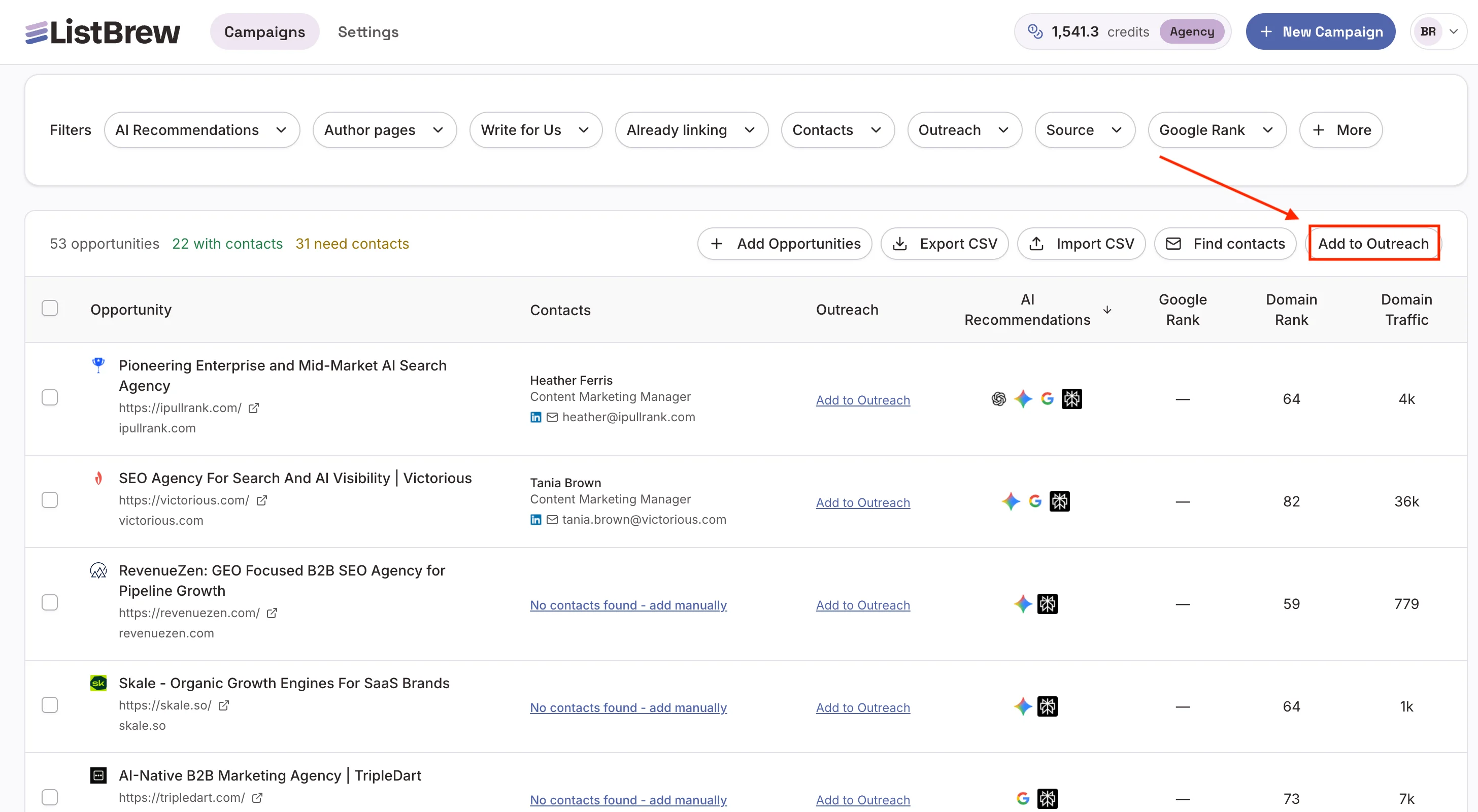
Go to the Outreach tab and select the sequence name you’ve just created. From there, go to Sequence to build your email sequences: initial pitch + follow-ups.
Step 6: Continue refining your pitches
Track your replies and use the data to understand what’s working and what isn’t.
Continue testing different subject lines, pitch angles, proposals, and email copy to see which combinations generate the most positive responses.
For example, you can test:
Subject lines: Keep them short and specific, or test more curiosity-driven variations.
Pitch angles: Lead with a specific topic idea, a content gap you spotted, or a unique perspective you can contribute.
Email copy: Experiment with shorter pitches versus more detailed proposals.
Personalization: Test different levels of personalization to find the right balance between relevance and efficiency.
Calls to action: Try different CTAs, such as asking whether they’re interested in the topic or offering to send over an outline.
The goal isn’t to find one perfect pitch and use it forever. Keep refining your outreach based on what your prospects actually respond to.
Over time, these insights will help you develop a repeatable pitch process that consistently generates more positive responses.
Guest post outreach best practices
Here are some interesting outreach tips that Jelo and Christine shared with me:
Avoid “Write for Us” sites
It can be tempting to search for websites with a “Write for Us” page because these sites openly advertise guest posting opportunities.
However, Position Digital’s outreach team no longer specifically targets these websites. They found that these sites tend to be more editorial and are often paid placements. Some may also be part of private blog networks (PBNs) or link farms.
Jelo explains:
“We don’t really target ‘write for us’ sites anymore because we found that they’re generally more editorial and most of them are paid.”
A PBN is a network of websites created or controlled primarily to manipulate search engine rankings through links. Link farms similarly exist primarily to generate links rather than provide genuine value to readers.
Instead of looking specifically for sites advertising guest post opportunities, identify relevant companies first and assess whether they have an active blog.
Prioritize domains that frequently get cited by AI
Don't just evaluate prospects based on traditional SEO metrics. Look for domains that are frequently cited in AI search results for topics you want your brand to be associated with.
Identify the topics you want to be cited for, then search AI platforms such as Google AI Overviews, ChatGPT and Perplexity to see which websites regularly appear as sources.
These domains can be valuable outreach prospects because they already demonstrate visibility and authority around the topics you're targeting.
This gives you another way to prioritize prospects beyond metrics like Domain Rating and organic traffic.
Personalize the substance, not just the greeting
Changing “Hi John” to “Hi Sarah” isn't meaningful personalization.
The strongest personalization happens in the actual proposal. Your topic ideas should be specific to the prospect and their audience.
As Christine puts it, the goal is to make the proposed topics relevant “not just to them but to their audience.”
Don't give up too quickly during negotiations
A prospect declining your initial guest post proposal doesn't necessarily mean the relationship is over.
If appropriate, explore other forms of collaboration, such as link exchanges or listicle exchanges.
Jelo explains:
“Before we let go of our prospects, we want to do everything that we can.”
The goal is to find a mutually valuable arrangement rather than forcing one particular type of link-building campaign.
Treat outreach as relationship building
A successful collaboration shouldn't be treated as a one-off transaction.
Christine recommends keeping in touch with prospects even after a collaboration ends:
“Always, once the collaboration ends, always keep in touch with the prospect because you will not know that you probably, in the next collaboration, you may need them.”
This is particularly valuable when you're running ongoing outreach campaigns. A prospect who collaborated with you on a guest post today could become a useful contact for another campaign or collaboration in the future.
As Christine puts it:
“When you do link building, you're not necessarily just building links, you're building connections.”
So, once a campaign ends, don't simply remove the prospect from your database. Keep the relationship open and look for opportunities to work together again.
Kickstart your guest post outreach campaigns with ListBrew
finding prospects, researching websites, finding contact details, and managing outreach sequences can take a lot of time when you're doing everything manually.
ListBrew helps you streamline the process in one place. You can discover relevant guest post prospects, identify contact information, and organise your outreach campaigns without jumping between multiple tools.
Ready to spend less time building prospect lists and more time securing relevant collaborations?
Start your guest post outreach campaign with ListBrew today. Sign up for free — no credit card required!